Language Access Laws in Healthcare: What Miami Hospitals and Patients Need to Know
By ITU Translation Services · Published 2026-03-24
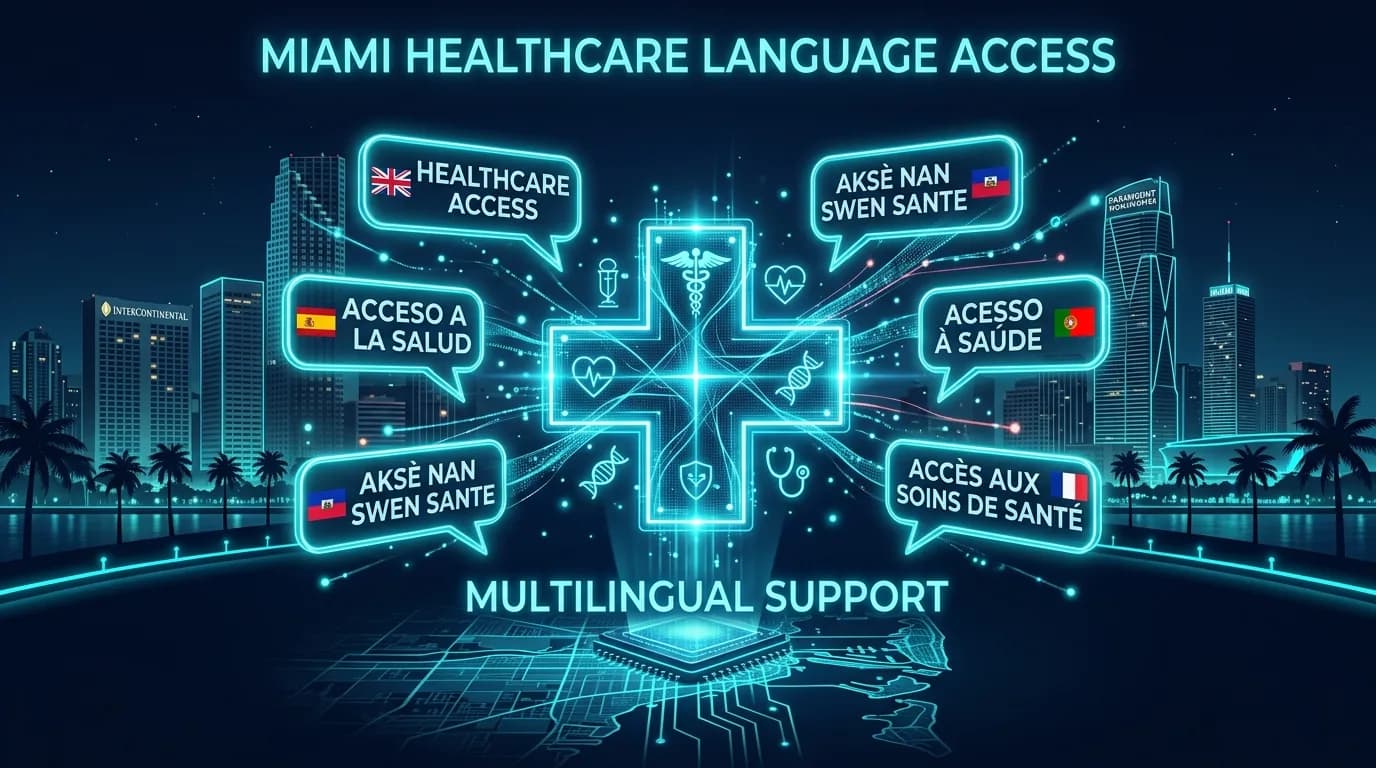
If you’ve ever needed to explain a diagnosis, navigate a discharge form, or give informed consent in a language that isn’t your native tongue, you already understand the stakes. In Miami — one of the most linguistically diverse cities in the United States — the intersection of language and healthcare is not a minor operational detail. It’s a matter of life and death.
Federal law is clear on this point: healthcare providers who receive federal funding must provide language access services to patients with Limited English Proficiency (LEP). But many patients don’t know their rights, and some providers still fall short of compliance. This guide breaks down what the law requires, what Miami hospitals and clinics must do, and how professional medical interpreters and translators make the difference when it matters most.
What Is “Limited English Proficiency” (LEP)?
The term Limited English Proficiency refers to individuals who do not speak English as their primary language and have a limited ability to read, speak, write, or understand English. In Miami-Dade County, this describes a significant portion of the population.
According to U.S. Census data, more than 70% of Miami-Dade residents speak a language other than English at home. Spanish is by far the most common, but Haitian Creole, Portuguese, French, Mandarin, and dozens of other languages are also spoken throughout neighborhoods like Hialeah, Little Havana, Little Haiti, Brickell, and Doral.
For these residents, navigating a hospital or clinic in English is not simply inconvenient — it can result in misdiagnosis, improper medication use, delayed care, and preventable medical errors.
The Federal Framework: Title VI of the Civil Rights Act
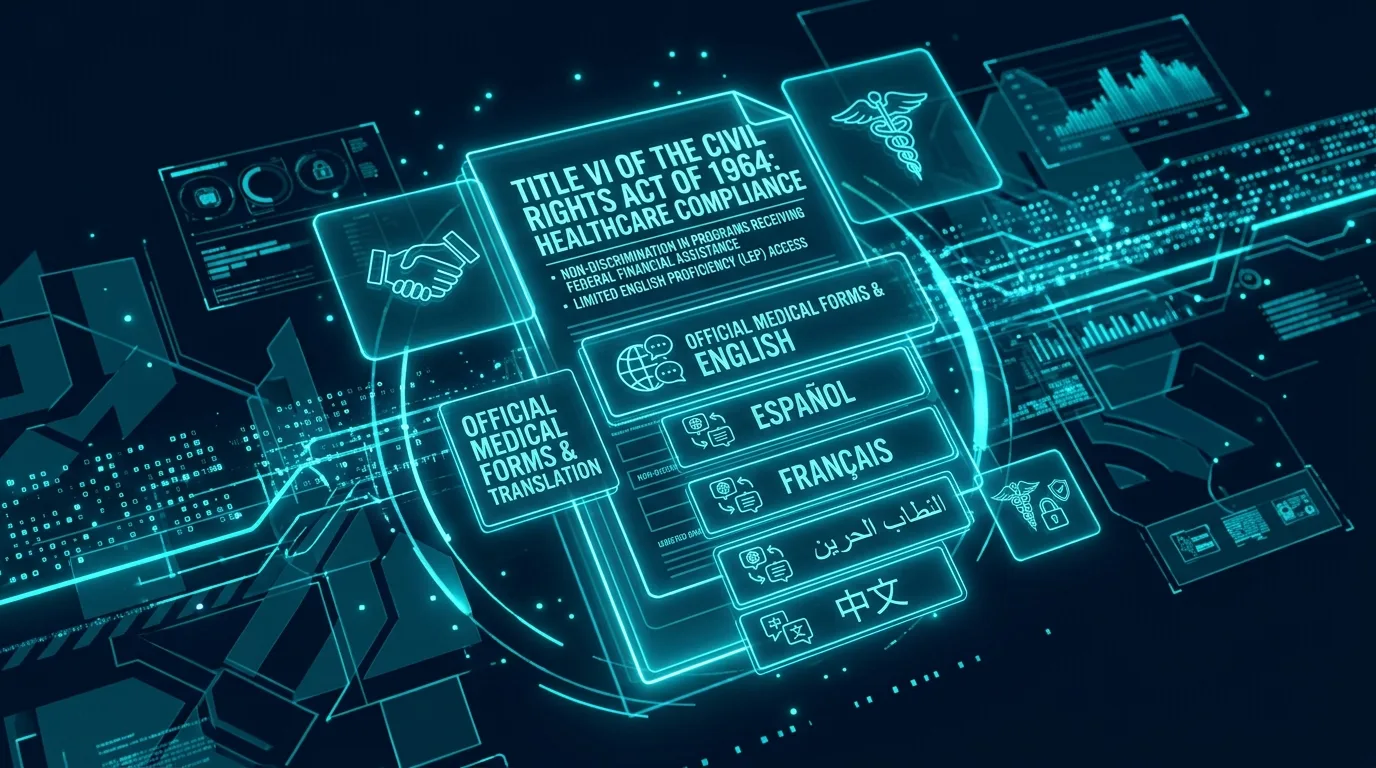
The cornerstone of language access law in healthcare is Title VI of the Civil Rights Act of 1964, which prohibits discrimination based on national origin by any program or activity receiving federal financial assistance. In 1974, the U.S. Supreme Court ruled in Lau v. Nichols that failing to provide language access to LEP individuals constitutes national origin discrimination under Title VI.
The U.S. Department of Health and Human Services (HHS) has issued guidance making clear that:
- Covered entities — hospitals, clinics, nursing homes, home health agencies, managed care organizations, and other providers receiving Medicaid or Medicare funding — must provide language services at no cost to the patient.
- These services must be timely and adequate — not merely available on paper.
- Providers may NOT require patients to use family members as interpreters for clinical encounters, with limited exceptions.
- Providers must take reasonable steps to notify LEP individuals that free language services are available.
Virtually every hospital, emergency room, clinic, and community health center in Miami that accepts Medicare or Medicaid funding — which is nearly all of them, including Jackson Memorial Hospital, Baptist Health South Florida, and Miami-Dade’s network of federally qualified health centers — is subject to Title VI.
The ACA’s Section 1557: Stronger Protections for LEP Patients
The Affordable Care Act added another layer of protection. Section 1557 of the ACA, the health equity provision, explicitly prohibits discrimination in healthcare based on national origin (among other protected characteristics). The implementing regulations require covered healthcare programs to:
- Provide a qualified interpreter or translation services when a patient requests them.
- Post notices of nondiscrimination and available language assistance in the top 15 languages spoken in the state.
- Use qualified interpreters — not untrained bilingual staff or family members — for clinical communications.
- Translate vital documents (such as consent forms, discharge instructions, and notices of patient rights) into the language(s) prevalent in the patient population.
For Miami providers, this means Spanish and Haitian Creole are at minimum required in most posted notices and frequently translated documents. Many facilities also include Portuguese, French, and other languages common to their specific patient population.
Florida State Protections for LEP Healthcare Patients
Florida adds its own requirements on top of federal law. The Florida Patient’s Bill of Rights and Responsibilities (Section 381.026, Florida Statutes) guarantees patients the right to receive information in a manner they can understand. This applies broadly — including to patients who have communication barriers due to language.
Florida Medicaid managed care plans are required to provide interpreter services for enrollees. The Florida Department of Health has also issued guidance encouraging healthcare providers to maintain internal protocols for language access, including:
- Identifying the patient’s preferred language at intake
- Using a qualified medical interpreter (not untrained bilingual staff)
- Documenting language preferences in the patient’s electronic health record
- Training staff on language access policies
The “Family Member” Problem
Despite what federal and state law says, one of the most common compliance failures in Miami healthcare is the use of family members — often children — as interpreters. This practice is sometimes called ad hoc interpretation, and it carries serious legal and clinical risks.
Under HHS guidance, covered healthcare providers should not use minor children as interpreters for clinical purposes. And using a patient’s adult family member is only permissible when the patient explicitly requests it and it won’t compromise the quality of care or privacy.
The problems with family interpreters are well-documented:
- They may not know medical terminology in either language.
- They may soften or change information to protect their family member emotionally.
- They may introduce their own fears, biases, or misunderstandings.
- They compromise patient privacy (HIPAA considerations apply).
- They expose the provider to liability for miscommunication.
A professional medical interpreter — especially one trained in clinical interpretation standards — eliminates these risks entirely.

What “Qualified Interpreter” Really Means
Federal law requires a qualified interpreter, but what does that mean in practice? HHS defines a qualified interpreter as someone who:
- Is proficient in English and the target language
- Is able to interpret effectively, accurately, and impartially
- Adheres to interpreter ethics and conduct
- Has relevant training or demonstrated competence
For complex medical encounters — oncology consultations, psychiatric evaluations, surgical consent discussions, labor and delivery — professional medical interpreters certified by organizations like the Certification Commission for Healthcare Interpreters (CCHI) or the National Board of Certification for Medical Interpreters (NBCMI) are the gold standard.
At International Translations USA, our medical interpreters are trained in clinical terminology across specialties including emergency medicine, cardiology, oncology, obstetrics, and psychiatry. We serve facilities across Miami-Dade County — from Jackson Memorial Hospital and Hialeah Hospital to community clinics in Wynwood and Coral Gables — with both on-site and remote (video or phone) interpretation.
What Miami Healthcare Providers Must Have in Place
If you operate a healthcare practice, clinic, or hospital in Miami, here’s a practical compliance checklist:
- Language Identification at Intake
Ask every patient their preferred language. Use a “I Speak” language identification card or card deck if needed. Document the language preference in the patient record. - Access to Qualified Interpreters
Have a contract or on-call arrangement with a qualified medical interpretation service. This should include on-site interpreters for high-volume languages and phone/video interpretation for less common languages. - Translation of Vital Documents
Consent forms, discharge instructions, patient rights notices, and medication instructions should be available in the languages most commonly needed by your patient population. At minimum: Spanish and Haitian Creole for most Miami providers. - Staff Training
Clinical and administrative staff should understand the language access policy and know how to request interpreter services. They should never pressure patients to use family members to avoid calling an interpreter. - Posted Notices
Section 1557 requires posting notices of nondiscrimination and language assistance availability in common areas and patient-facing materials, in the top 15 languages spoken in Florida. - No-Cost Services
Language access services must be provided free of charge to the patient. Billing a patient for an interpreter or translator is prohibited.
Consequences of Non-Compliance
Healthcare providers who fail to meet language access requirements face real consequences:
- HHS Office for Civil Rights (OCR) complaints — Patients or advocates can file complaints with the OCR, which investigates and can mandate corrective action, including training requirements, policy changes, or funding penalties.
- CMS enforcement — Centers for Medicare & Medicaid Services can take action against non-compliant providers.
- State licensing board complaints — Florida’s Department of Health can investigate patient rights violations.
- Medical malpractice liability — Communication breakdowns due to lack of interpreter services have been the basis for malpractice claims. Miscommunication during informed consent, diagnosis, or medication instructions can lead to serious legal exposure.
- Reputational harm — In a community as language-diverse as Miami, providers known for communication barriers face real risk to their patient base.
How Professional Medical Interpretation and Translation Supports Miami’s Healthcare Community
At International Translations USA, we’ve been a partner to Miami’s healthcare ecosystem for over a decade. Our services for healthcare providers include:
- On-site medical interpretation — Spanish, Haitian Creole, Portuguese, French, Mandarin, Arabic, and 120+ other languages. We serve hospitals, clinics, private practices, and specialty centers.
- Remote interpretation (OPI/VRI) — Phone and video interpretation for urgent needs or lower-volume languages. Available 24/7 for emergencies.
- Medical document translation — Patient intake forms, discharge summaries, medication guides, consent forms, and clinical study materials — all translated by subject-matter experts.
- USCIS-certified document translation — For patients navigating immigration healthcare needs.
Whether you’re an administrator at a Brickell specialty clinic, a case manager at Jackson Memorial, or a community health worker serving patients in Little Haiti, our team is equipped to help you meet your language access obligations — and more importantly, to ensure every patient gets the care they deserve.
Know Your Rights as a Patient
If you’re a patient seeking care in Miami and English is not your first language, remember:
- You have the right to a free interpreter. Ask for one at registration.
- You do not have to use a family member. It’s your right to have a professional interpreter.
- Consent forms should be in your language. If they’re not, ask for a translated version.
- You can file a complaint. If a provider refuses language services, you can file with the HHS Office for Civil Rights at ocrportal.hhs.gov.
Final Thoughts: Language Access Is a Civil Right — and a Clinical Imperative
Miami’s diversity is one of its greatest strengths. But that diversity demands that our healthcare system rise to meet patients where they are — in their language. Federal and Florida law provide a framework, but compliance requires more than checking a box. It requires relationships with qualified interpreters, proactively translated materials, and a cultural commitment to equitable care.
International Translations USA is proud to support that commitment every day, across Miami-Dade County and beyond.
Need certified or professional translation services in Miami? Contact International Translations USA today — call (305) 747-5996 or request a free quote online. Our team specializes in medical interpretation, certified document translation, and language services for healthcare providers across Miami.

ITU Translation Services
ATA corporate member and BBB A+ rated translation agency in Miami, FL. Certified translations in 120+ languages, accepted by USCIS, courts and institutions nationwide since 2017.



Need a certified translation?
Free quote in minutes — USCIS acceptance guaranteed.