Marriage-Based Immigration Document Translation in Miami: What USCIS Wants
By ITU Translation Services · Published 2026-09-28
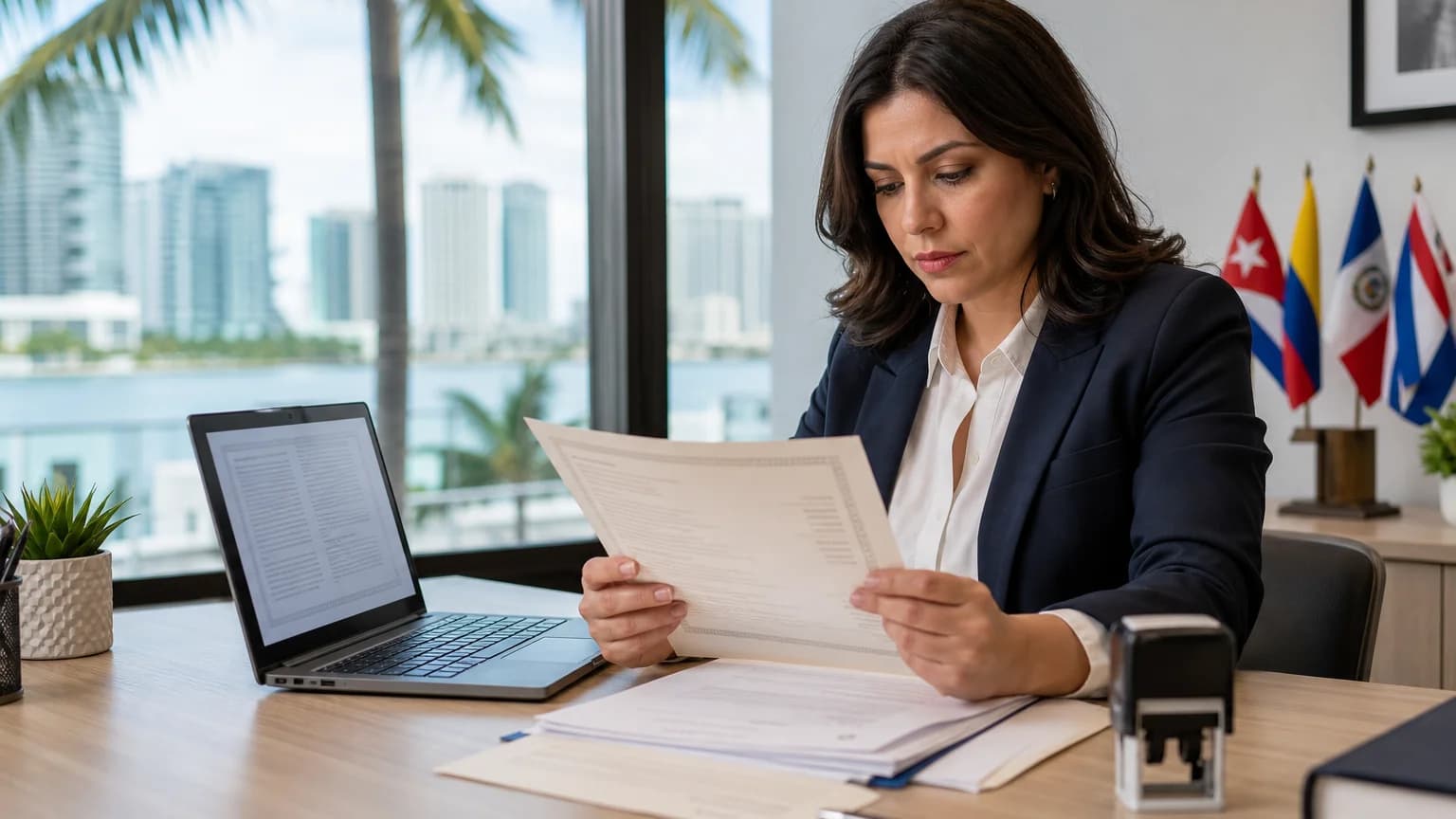
Quick Summary: Marriage-based immigration document translation means certified English translations of every foreign-language document a couple submits with Form I-130, Form I-485, or a consular case at the National Visa Center — typically a marriage certificate, both spouses' birth certificates, and any prior divorce decrees or death certificates proving a previous marriage ended. USCIS and the NVC will not accept a foreign-language document without a signed certificate of translation accuracy attached. Missing or informal translations are one of the most common, and most avoidable, causes of a Request for Evidence in a Miami marriage-based case.
Miami runs on binational households, and a large share of the marriage-based petitions filed out of South Florida involve a spouse whose civil documents were issued in Cuba, Colombia, Venezuela, Haiti, Brazil, or another non-English-speaking country. Marriage-based immigration document translation is the step that turns those civil records into evidence USCIS or the NVC can actually rely on, and it has to happen before the petition goes in the mail, not after an officer sends back a Request for Evidence.
What Marriage-Based Immigration Document Translation Covers
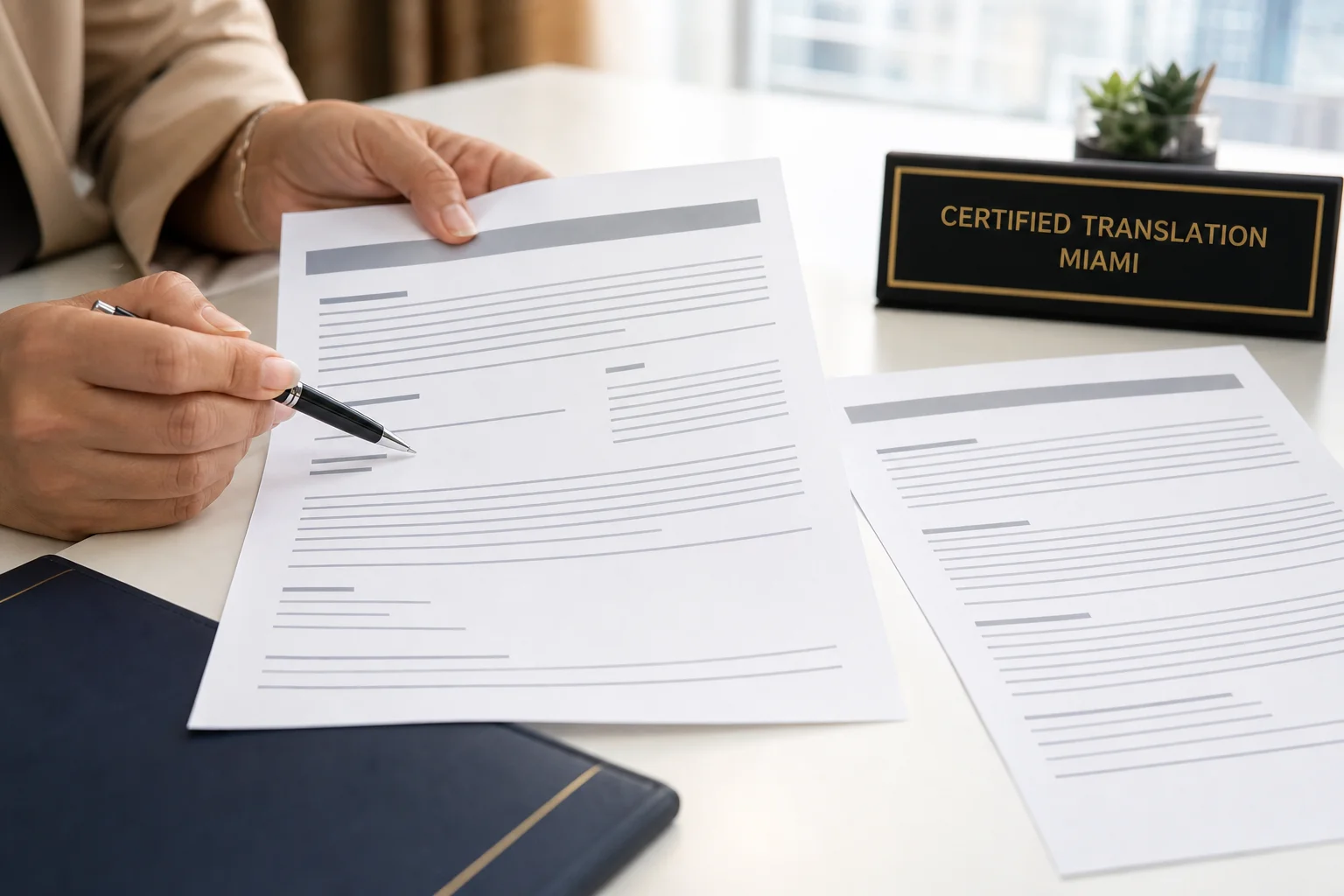
Federal regulation 8 CFR 103.2(b)(3) requires that any document containing a foreign language submitted to USCIS include a full English translation, along with the translator's certification that the translation is complete and accurate and that the translator is competent to translate. That single sentence covers the entire evidence file behind a marriage-based case: the marriage certificate itself, both spouses' birth certificates, and, when either spouse was married before, the divorce decree or former spouse's death certificate that proves the prior marriage legally ended.
Consular cases follow the same rule outside USCIS. Once a Form I-130 is approved and the case moves to the National Visa Center for consular processing, the NVC likewise requires a certified English translation of every civil document, not a summary and not a notarized-only version prepared informally by a friend or relative. A translation that skips the signed certification, even if the English itself is accurate, is not something a caseworker can accept.
Which Documents USCIS and the NVC Actually Require
The exact list depends on the visa category — Form I-130 for a family petition, Form I-485 for adjustment of status inside the U.S., or a CR-1/IR-1 or K-1 case processed through a U.S. consulate abroad — but most Miami marriage-based files include the same core civil records:
- Marriage certificate. The primary evidence of the marriage itself, required in every category.
- Birth certificates for both spouses. Used to confirm identity, age, and, for a U.S. citizen petitioner, citizenship-supporting family history.
- Divorce decrees or annulment judgments from any prior marriage, for either spouse, showing the marriage was legally terminated before the current one began.
- Death certificates in place of a divorce decree, when a prior marriage ended through the death of a former spouse.
- Police or background clearance certificates, when a specific consulate's instructions call for them ahead of the immigrant visa interview.
None of these documents need to originate in English for the marriage to be valid — a Cuban civil marriage certificate or a Colombian registro civil is fully valid evidence. What USCIS and the NVC need is a certified, word-for-word English translation attached to the original foreign-language document, not a paraphrase and not a relative's best effort. Our certified translation services page covers the exact certificate format both agencies expect, and we've translated more than a million USCIS-bound documents across exactly this kind of case.

A Pre-Filing Translation Checklist for Miami Couples
Before a Form I-130 goes to USCIS, or a consular packet goes to the NVC, walk through this list:
- Confirm every foreign-language civil document in the packet — marriage certificate, birth certificates, prior divorce decrees or death certificates — has a matching certified English translation attached.
- Check that each translation carries a signed certificate of accuracy identifying the translator and stating the translation is complete. A translation without this statement is not a certified translation, regardless of how accurate it is.
- If a document was previously translated for a different purpose (a school application, a bank, a prior visa), have it reviewed rather than reused — agencies want the certificate tied to this filing, and older translations sometimes miss updated formatting requirements.
- For a consular case, confirm the specific U.S. embassy or consulate's instructions on notarization, since some posts request it in addition to the standard translator certification even though USCIS itself does not.
- Build in turnaround time. A missing or defective translation is one of the more common, entirely avoidable reasons a case slips past its expected timeline.
For couples working with counsel on a marriage-based case, our translation services for law firms page outlines how we deliver certified packages directly to attorneys handling I-130 and I-485 filings, and our legal translation services page covers the broader range of court and immigration documents we handle beyond marriage-based cases. When a foreign civil document also needs an apostille before it is submitted, our trusted partners page connects clients with the notary and apostille resources that pair with a certified translation.
"The most common delay we see in marriage-based cases isn't the marriage certificate — it's the divorce decree from years earlier that nobody thought to translate until USCIS asked for it," says ITU's certified translation team. "Translating the full document set up front, before filing, is what keeps a case on schedule."
If your case involves asylum or Temporary Protected Status alongside a marriage-based filing, our guide to asylum and TPS translation in Miami walks through the overlapping document requirements for that track.
Frequently Asked Questions
Does a marriage certificate issued by a U.S. consulate abroad need translation?
No. If the marriage certificate or civil record was already issued in English, no translation is required. Translation is only needed for documents issued in a foreign language.
What if one spouse was married before?
Any prior marriage needs its own certified translation of the divorce decree, annulment judgment, or former spouse's death certificate, in addition to the current marriage certificate, to show the earlier marriage legally ended before the current one began.
Do these translations need to be notarized as well as certified?
USCIS itself only requires the signed certificate of translation accuracy, not notarization. Some consulates processing cases abroad request notarization in addition, so it's worth checking the specific post's instructions before the interview.
How fast can a Miami couple get a full document set translated?
Standard, rush, and same-day turnaround are all available, with quotes confirmed within minutes, 24 hours a day, seven days a week, through our online quote form.
Can the same translation be reused for a later immigration step, like adjustment of status?
Often yes, as long as the underlying document and certification are still current and complete. We keep prior translations on file for clients so a later filing, such as Form I-485, can reuse the same certified package rather than starting over.
ITU Translation Services
ATA corporate member and BBB A+ rated translation agency in Miami, FL. Certified translations in 120+ languages, accepted by USCIS, courts and institutions nationwide since 2017.



Need a certified translation?
Free quote in minutes — USCIS acceptance guaranteed.