Translation Agency Miami vs. Freelance Translators: Which Is Better For Your Legal Documents?
By ITU Translation Services · Published 2026-03-16
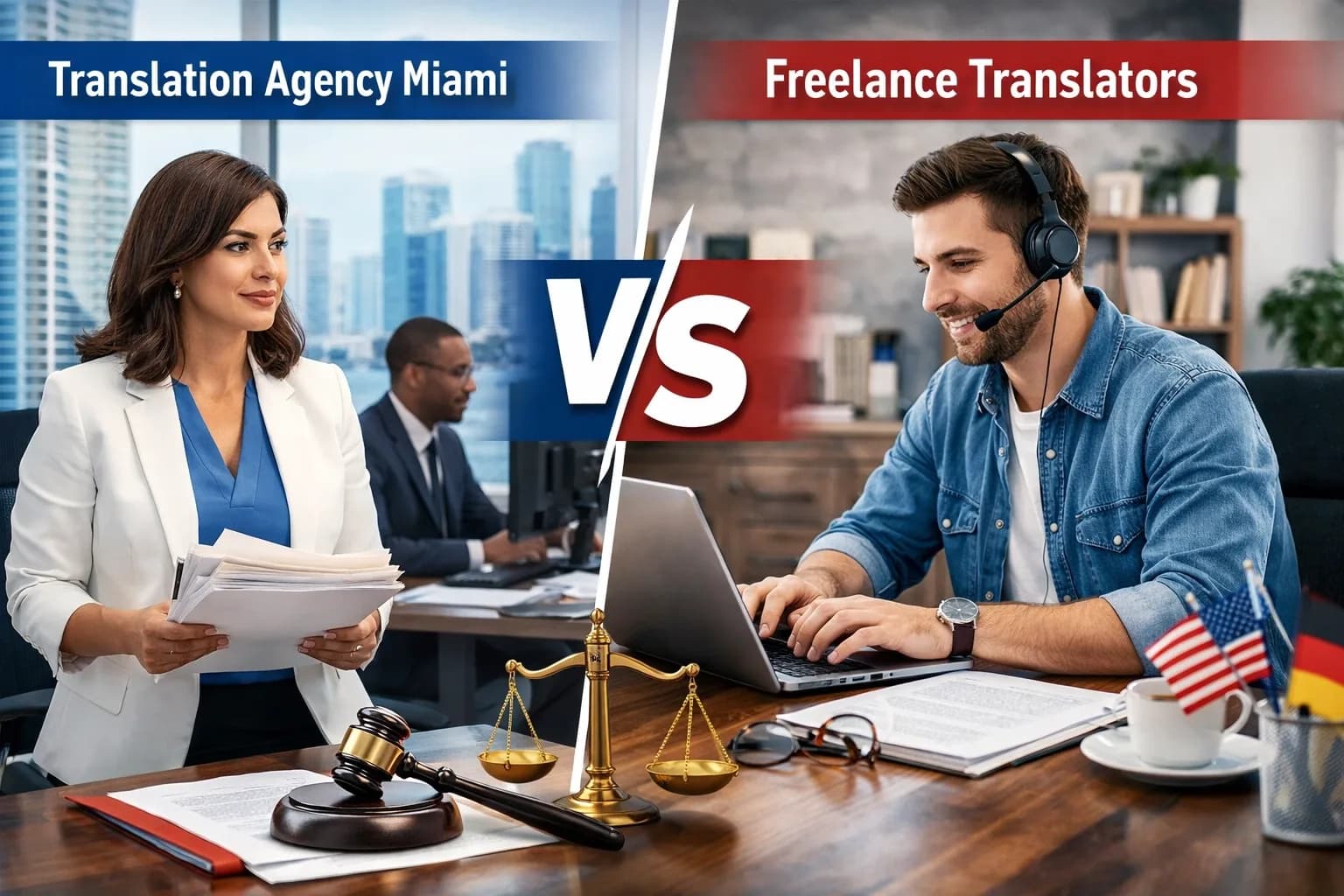
In the vibrant and internationally connected landscape of South Florida, the demand for precise linguistic services is more than just a convenience: it is a cornerstone of daily business and legal operations. Miami serves as the primary gateway to Latin America and a major hub for global trade, which means that local law firms, corporations, and private individuals constantly navigate a sea of multilingual documentation. When faced with the need to translate a sensitive legal contract, an immigration filing, or a corporate agreement, the first question most people ask is whether they should hire an independent freelance translator or partner with an established translation agency Miami. This choice carries significant weight because in the legal realm, a single mistranslated word can lead to a rejected application, a breached contract, or a prolonged court battle.
For many Miami residents and business owners, the appeal of a freelance translator often begins and ends with the perceived cost savings. Freelancers generally have lower overhead costs than a full-scale firm and may offer a more direct, personal line of communication. If you are working on a creative project or a casual letter, this route might be sufficient. However, when dealing with document translation services miami fl specifically for legal purposes, the risks associated with a single-person operation often outweigh the initial savings. Legal translation requires an incredibly high level of specialized knowledge that spans across different legal systems: such as comparing the civil law systems common in Latin America and Europe with the common law system used in the United States: and most individual freelancers simply do not have the resources to provide the multi-layered verification that these documents demand.
One of the primary advantages of working with a professional translation agency Miami like International Translations USA is the built-in quality assurance infrastructure. In a legal context, accuracy is not a goal: it is a non-negotiable requirement. While a freelancer works in isolation and acts as their own editor, a reputable agency utilizes a multi-step process involving a dedicated translator, a secondary legal reviewer, and a final proofreader. This system of checks and balances ensures that terminology remains consistent throughout the document and that human error is caught before the final product is delivered to the client. This level of redundancy is nearly impossible for a solo practitioner to replicate, and for documents that must be submitted to the Florida courts or federal agencies, this extra layer of protection is essential for maintaining peace of mind.

Accountability is another major factor that distinguishes a professional agency from an independent contractor. When you utilize document translation services Miami fl through an agency, you are entering into a formal business relationship backed by organizational accountability and, frequently, professional indemnity insurance. If an error occurs: even a minor one: an agency has the staff and the protocols to rectify the situation immediately, often providing updated documents at no additional cost and with the necessary certifications to satisfy the receiving authority. Conversely, if a freelancer becomes unavailable due to illness or personal reasons, or if they simply lack the insurance to cover a legal mistake, the client is left with very little recourse. This is why many experienced legal professionals suggest checking for Miami translation red flags before committing to a provider, as the cheapest option can often become the most expensive one if a document is rejected by a judge or a government official.
The concept of certification is perhaps where the divide between agencies and freelancers is most visible. For those navigating the immigration process, the requirements for USCIS certified translation services Miami are strict and specific. A certified translation must include a formal letter of accuracy signed by the translator or the translation coordinator, stating that the translation is complete and accurate to the best of their knowledge. While some freelancers can provide this, agencies have standardized, court-accepted formats and established reputations with local government bodies that ensure smooth acceptance. Furthermore, many legal documents in Florida require notarization to verify the identity of the person signing the certification. An agency like International Translations USA often provides in-house notarization services, creating a seamless one-stop-shop experience that saves the client the hassle of finding a separate notary.
Scalability and speed are also critical considerations for Miami-based businesses involved in fast-moving industries like real estate, international finance, or maritime law. A freelance translator is limited by the number of hours they can work in a day. If a large-scale litigation case arises: requiring the translation of thousands of pages of evidence within a week: a single freelancer will inevitably become a bottleneck. A professional translation agency Miami can mobilize a team of specialized linguists to work on different sections of the project simultaneously while maintaining a centralized glossary to ensure linguistic cohesion. This ability to scale operations instantly allows businesses to meet tight deadlines without sacrificing the quality or legal defensibility of the translated materials.

Consider the case of a business owner in the Brickell neighborhood who is looking to finalize a merger with a firm in Brazil. The documents involved: articles of incorporation, financial statements, and shareholder agreements: are dense with technical terminology. A freelance translator might be fluent in Portuguese but might not be intimately familiar with the specific nuances of Brazilian corporate law versus Florida statutes. By choosing an agency, the business owner gains access to a network of linguists who are not only native speakers but also experts in specific legal domains. This expertise ensures that a term like “force majeure” or “indemnification” is translated in a way that carries the same legal weight in both jurisdictions: a nuance that a generalist translator might easily overlook.
For individual residents, the choice often comes down to navigating life’s major milestones, such as marriage, education, or immigration. When preparing documents for a visa application, it is vital to understand the difference between notarized vs certified Miami translation to avoid delays. An agency can guide a client through these requirements, explaining exactly what is needed for their specific situation. This educational aspect of the service is a hallmark of a professional firm; they act as a consultant rather than just a service provider. Before making a final decision, it is often helpful to review 10 things you should know before choosing translation services to ensure the provider aligns with your specific legal needs and deadlines.
Cost is undoubtedly a factor in any decision, and it is true that agencies typically charge higher fees than freelancers. However, it is important to view this through the lens of risk management and total value. The cost of an agency includes the project management, the multi-stage review process, the specialized software used to maintain consistency, and the administrative support required to produce official certifications. In the context of legal documents: where the stakes involve potential lawsuits, the loss of a business deal, or the denial of a residency permit: the price difference between a freelancer and an agency is a small premium to pay for the security of knowing the job will be done correctly the first time.
Ultimately, the choice depends on the nature of the work, but for legal documents, the evidence strongly favors the agency model. A translation agency Miami offers a level of professionalism, technical expertise, and reliability that is difficult for a solo freelancer to match. By partnering with International Translations USA, clients in Miami and across the country gain access to a dedicated team that understands the local landscape and the global requirements of the legal industry. Whether you are dealing with a simple birth certificate for a passport application or a complex international contract for a multi-million dollar business venture, the specialized support of an agency ensures that your words carry the weight they need to succeed in any language.
In conclusion, while the freelance market has its place for creative and informal tasks, the rigorous demands of the legal sector require the robust infrastructure of a professional firm. The peace of mind that comes with knowing your documents are handled by experts: vetted, insured, and backed by a comprehensive quality control process: is invaluable. As Miami continues to grow as a global crossroads, the need for high-quality document translation services Miami fl will only increase, and choosing the right partner will remain a critical factor in achieving legal and personal success.
ITU Translation Services
ATA corporate member and BBB A+ rated translation agency in Miami, FL. Certified translations in 120+ languages, accepted by USCIS, courts and institutions nationwide since 2017.
Related Articles

2026-03-05
Courtroom MVPs: Why Miami Law Firms are Switching to Certified Interpretation Partners

2025-12-11
Notarized Translation Services Near Me vs. Regular Miami Translation: Which Is Better For Your Legal Case?

2025-12-08
How to Get USCIS-Approved Document Translation in Miami in 24 Hours (Easy Guide for Immigrants)
Need a certified translation?
Free quote in minutes — USCIS acceptance guaranteed.