Employee Handbook Translation in Miami: A Guide for Multilingual Teams
By ITU Translation Services · Published 2026-09-14

Quick Summary: Miami employers with multilingual teams reduce safety incidents, harassment complaints, and misunderstood policies when they invest in accurate employee handbook translation. Federal rules already require some workplace safety training to be delivered in a language workers understand, and professional translation of handbooks, safety policies, and benefits summaries closes the gap between a written policy and a policy employees can actually follow.
South Florida workplaces run on more than one language, from warehouses in Doral to hospitality staff on Miami Beach and construction crews across Miami-Dade. When the only version of your handbook is in English, workers who read Spanish, Haitian Creole, or Portuguese as a first language are left guessing about attendance rules, harassment reporting steps, and safety procedures. Employee handbook translation turns that guesswork into a document every employee can actually rely on, and it is one of the lowest-cost risk-reduction steps a Miami employer can take this quarter.
Why Employee Handbook Translation Matters for Miami Employers
An employee handbook is a legal record of what an employer promised and what it expects. If a wage-and-hour dispute, harassment complaint, or workplace injury ends up in front of an agency or a court, the employer will be asked whether the affected worker could reasonably understand the policy they are accused of violating, or the policy that was supposed to protect them. A handbook that exists only in English does not answer that question for a workforce where English is a second language.
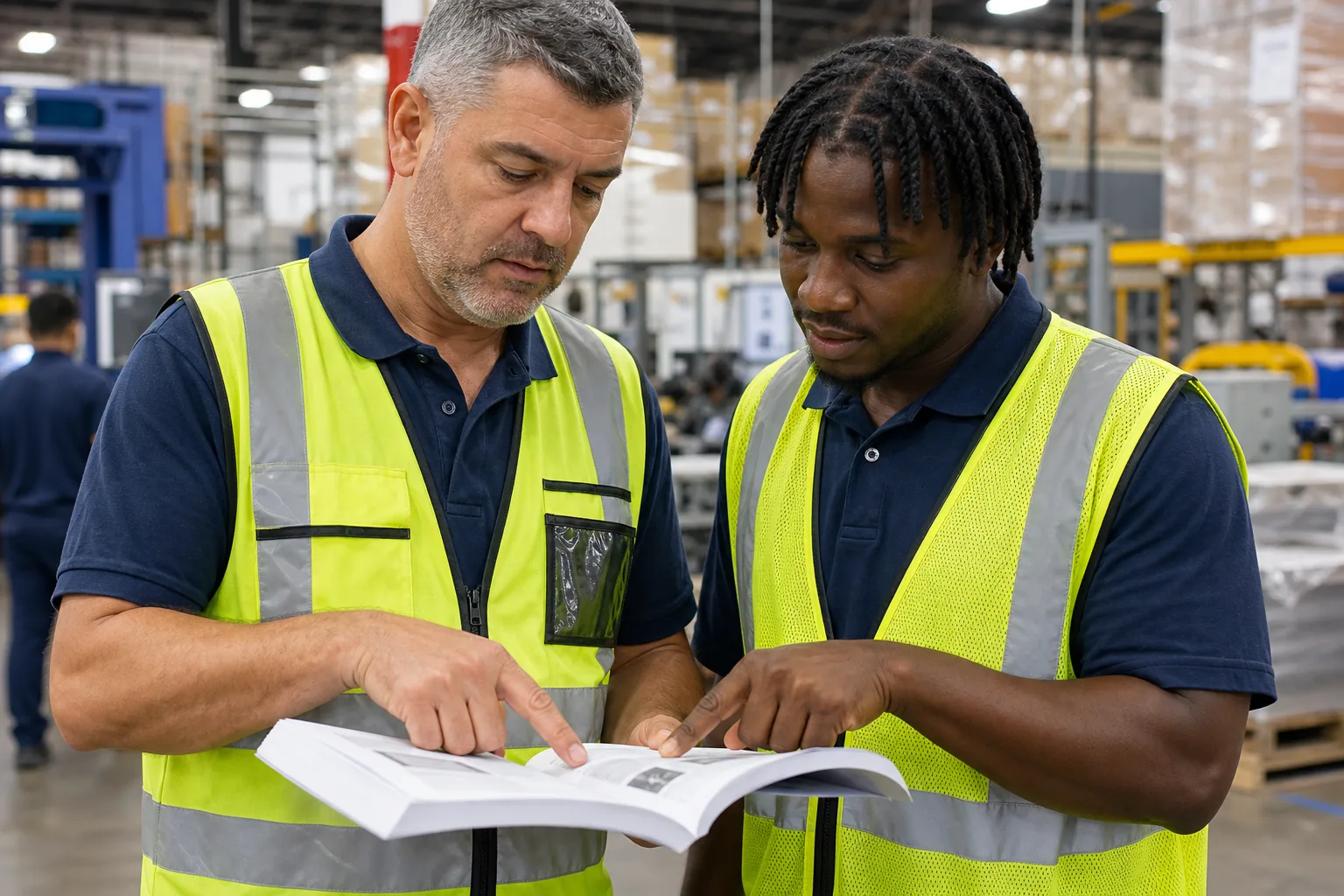
The U.S. Occupational Safety and Health Administration's Hazard Communication Standard requires that employees receive information and training on workplace hazards "in a manner and language that the employees can understand," and OSHA has repeatedly cited employers whose safety training assumed English fluency it could not verify (OSHA Hazard Communication Standard). A translated handbook and translated safety policies are the paper trail that shows this requirement was actually met, not just assumed.
Where Language Gaps Create the Most HR Risk
Not every page of a handbook carries equal risk. When budgets or timelines are tight, prioritize:
- Anti-harassment and complaint procedures. The U.S. Equal Employment Opportunity Commission treats national origin as a protected category and has found that policies effectively unreadable to a language group can undermine an employer's defense that it maintained an accessible reporting process (EEOC national origin discrimination guidance).
- Safety and emergency procedures. Evacuation routes, chemical handling, and machine lockout steps need translation before harassment or benefits sections, since the consequence of a misunderstanding is physical injury, not just a grievance.
- Wage, timekeeping, and leave policies. Overtime eligibility, meal-break rules, and paid leave accrual are common sources of Department of Labor complaints when the written policy and the worker's understanding of it diverge.
- Benefits summaries and open enrollment materials. Employees who cannot read plan details in their primary language often make enrollment decisions based on secondhand explanations instead of the actual policy.
Certified vs. Standard Translation for HR Documents
Not every HR document needs the same level of certification. A signed Certificate of Translation Accuracy is worth requesting for documents that could become evidence in a dispute or audit: the core handbook, safety policies, and any acknowledgment forms employees sign. Internal memos, meeting notes, and day-to-day communications can typically move faster through standard professional translation. A qualified business translation services partner will tell you which category a given document falls into rather than certifying everything by default, which keeps turnaround times reasonable without cutting corners on the documents that matter most.

Rolling Out a Translated Handbook Without Creating Two Different Policies
The most common mistake employers make is treating the translated handbook as a courtesy copy instead of a controlling document. To avoid the two-policies problem:
- Translate from the final, approved English version, not an earlier draft.
- Have a second linguist proofread the translation against the source, the same way legal and medical translations are quality-checked.
- Update both language versions together whenever a policy changes, and date-stamp each version identically.
- Keep a signed acknowledgment form in each employee's working language, not just in English.
- Pair the rollout with live interpretation for the handbook meeting itself, so questions can be answered on the spot in the employee's language through professional interpretation services.
Employers that also translate onboarding and safety training materials, not just the handbook itself, tend to see the biggest drop in repeat questions and misunderstandings; see our related guide to multilingual employee training translation for how the two efforts fit together.
Frequently Asked Questions
Does Miami employee handbook translation need to be certified?
Certification is not legally required for internal HR documents, but a signed Certificate of Translation Accuracy is worth requesting for the core handbook and any policy employees sign, since it documents exactly what was translated and by whom if the document is ever questioned.
Which languages should a Miami employer prioritize first?
Start with the languages actually spoken by your current workforce. In Miami-Dade that most often means Spanish and Haitian Creole, with Portuguese common in hospitality, construction, and logistics teams; a language-access review of your payroll and application records will show your real priority order.
What is the difference between translating a handbook and providing an interpreter for the rollout meeting?
Employee handbook translation gives every worker a written policy in their own language to keep and reference later. Interpretation covers the live meeting where the handbook is introduced, so employees can ask questions and get answers in real time. Most employers need both, not one instead of the other.
How long does professional employee handbook translation take?
Turnaround depends on document length, formatting, and how many languages are needed, but a standard 20-40 page handbook into one additional language is typically deliverable within several business days once source content is finalized. Get a free quote with your handbook length and target languages for an exact timeline.
"Handbooks and safety policies are some of the highest-stakes documents we translate, because employees are expected to follow them from day one," notes ITU Translation Services. "A policy nobody can read is a policy nobody can actually follow." If your Miami team includes employees who read Spanish, Haitian Creole, Portuguese, or another primary language, request a quote for employee handbook translation today, or call (305) 747-5996 to talk through which policies to translate first.
ITU Translation Services
ATA corporate member and BBB A+ rated translation agency in Miami, FL. Certified translations in 120+ languages, accepted by USCIS, courts and institutions nationwide since 2017.



Need a certified translation?
Free quote in minutes — USCIS acceptance guaranteed.