Hospitality Translation in Miami: Hotels, Menus & Guest Communication
By ITU Translation Services · Published 2026-10-12

Quick Summary: Hospitality translation in Miami works best when a hotel or restaurant treats menus, signs, booking messages, and staff reference material as one connected guest journey. Start with the information a visitor needs to make a decision or find help, create an approved terminology list, and check every translated item in its real setting before printing or publishing. A translation partner can help adapt the wording across formats while your team remains responsible for prices, policies, and operational accuracy.
A guest may discover a Miami property online, book a room, scan a menu, and ask a front-desk question within a single day. Hospitality translation in Miami is not just replacing words on a flyer: it is helping that guest understand what is offered at each step. Greater Miami's official visitor bureau provides resources for international travelers, and its airport information listing describes multilingual tourist assistance. That local context is a reason to review your own guest-facing materials rather than assume one language or one channel reaches everyone.
Hospitality Translation in Miami: Map the Guest Journey First
Before requesting a quote, list the touchpoints a visitor actually sees. For a hotel, the list may include reservation confirmations, arrival instructions, check-in notices, room directories, amenity descriptions, and checkout messages. For a restaurant, it may include menus, reservation replies, hours, ordering prompts, and directions. A tour operator may also need meeting-point instructions, itinerary changes, and guest-service messages. These are examples to prioritize, not a claim that every business needs every item.
Put the highest-consequence information first: where to go, when to arrive, what an item costs, what is included, and whom to contact when plans change. Ask staff which questions guests repeat most often. That produces a more useful first translation batch than translating an entire marketing archive without a plan. If you need a broader project covering brochures, policies, and web copy, see ITU's business translation services for the scope of business materials it handles.
Menus Need More Than Word-for-Word Substitution
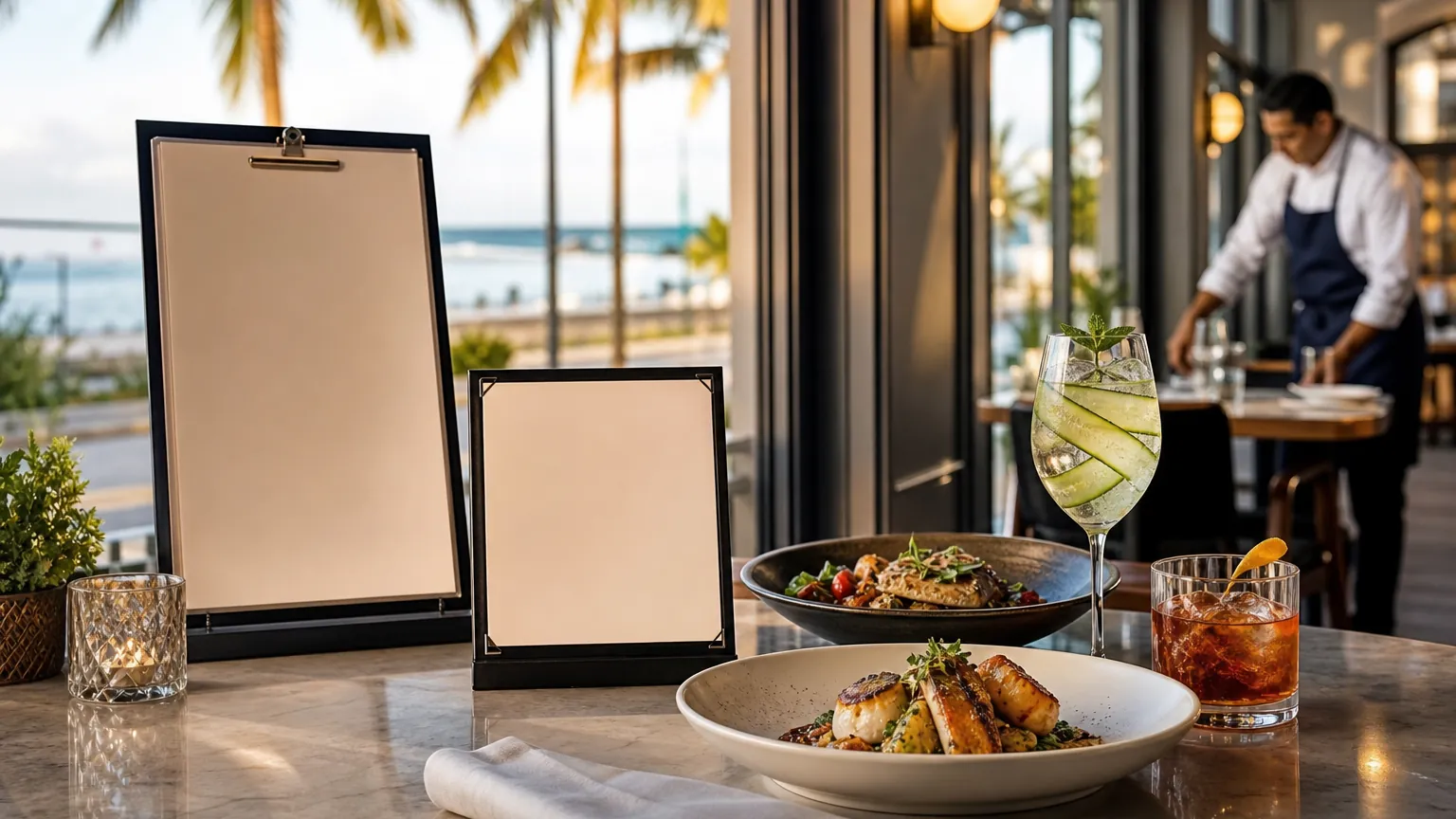
A translated menu should help a visitor understand the dish that will arrive. Give the translator a current source menu, ingredient descriptions, portion and preparation notes, and a decision about which dish names should remain in the original language. Keep the names of local dishes when they carry meaning, but add a clear description if the name alone does not tell a guest what to expect. Have the kitchen or manager verify the final wording against what is actually served.
Separate stable descriptions from information that changes often. Prices, availability, specials, and service details should have a named owner and an update process; a perfect translation of an obsolete menu is still a poor guest experience. Design matters too. Test translated text in the printed menu and the mobile ordering view because a phrase that fits one layout may wrap awkwardly or hide a key detail in another. If you use icons for dietary notes, ask staff to check that the text and symbols agree with the kitchen's current information; the business, not the translator, must confirm the underlying facts.
Signs, Booking Messages, and Guest Questions
Wayfinding signs are often brief, but brevity can create ambiguity. Give the translator a photo or floor plan showing where each sign sits: a label at an elevator, a notice at a pool entrance, and an instruction at an off-site pickup point serve different purposes. Check the finished sign from the guest's viewpoint, including type size and where it is mounted. A quick review in context can catch a direction that is linguistically correct yet unclear on the property.
Booking emails and automated messages should be mapped to the same approved language list as your signs. Confirm that arrival times, check-in locations, cancellation language, and support details match the property team's current process. Build a short change log: source wording, approved translation, owner, and the date each channel was updated. When an operational policy changes, that list gives your staff a way to find every affected version instead of guessing which PDF, email template, or QR-linked page is current.

Written translation does not replace a live conversation. If your team needs help communicating with a guest in real time, consider the separate interpretation services option. Decide in advance how front-desk staff will reach the right person or service, and keep sensitive guest details out of casual translation tools. For employee-facing procedures, the same version-control discipline applies; our employee handbook translation guide describes a related business workflow.
A Practical Translation Handoff Checklist
- Inventory: Gather the latest source files and URLs, noting where each item appears and who owns it.
- Prioritize: Start with arrival, safety-related directions, menu choices, and time-sensitive guest messages relevant to your operation.
- Set terminology: List property names, dish names, amenities, and phrases that should stay consistent across print, web, and email.
- Add context: Provide screenshots, photos, character limits, and the intended audience for short or ambiguous strings.
- Review: Ask an operations owner to check facts and a qualified language reviewer to check the translated copy in its final layout.
- Maintain: Record which versions went live, and assign an owner to update translations when the source changes.
A single translated asset can be a useful pilot. Choose a frequently used menu or arrival message, measure whether staff can maintain it, and then expand to the other points in the guest journey. The goal is a reliable process, not a folder of disconnected files. ITU's services overview can help you identify whether your next requirement is written translation or another language service.
Frequently Asked Questions
Which hospitality materials should we translate first?
Start with the materials guests need to arrive, choose a service, understand important property information, and ask for help. Front-desk questions and current guest feedback can help you rank the list for your specific operation.
Can we send only the menu text without the layout?
You can provide text for an initial scope, but share the final menu design or ordering screen before publication. Context helps a translator resolve short labels, and a layout review catches words that do not fit or sit beside the wrong item.
Should dish names and place names be translated?
Not automatically. Agree on a terminology guide first. Some names should remain recognizable, with a short explanation in the guest's language where that is more helpful than a literal substitute.
How do we keep hotel messages consistent when details change?
Keep an approved source version, a list of all places it appears, and an owner for each update. When arrival instructions or hours change, review both the source and translated versions before sending or publishing them.
Is written translation the same as interpretation?
No. Translation addresses written content; interpretation supports spoken or signed communication. A property may need both, depending on its guests and the interaction.
Ready to scope a menu, hotel communication, or guest-facing signage project? Call ITU Translation Services at (305) 747-5996 with your source materials and target languages so the team can discuss the appropriate service and quote. You can also start from our business translation services page.
Local context: Greater Miami Convention & Visitors Bureau, International Travel Resources; Miami International Airport Tourist Information Counter listing.
ITU Translation Services
ATA corporate member and BBB A+ rated translation agency in Miami, FL. Certified translations in 120+ languages, accepted by USCIS, courts and institutions nationwide since 2017.



Need a certified translation?
Free quote in minutes — USCIS acceptance guaranteed.