Medical Interpretation in Miami: Why a Family Member Isn’t a Substitute for a Pro
By ITU Translation Services · Published 2026-02-20 · Updated 2026-04-03
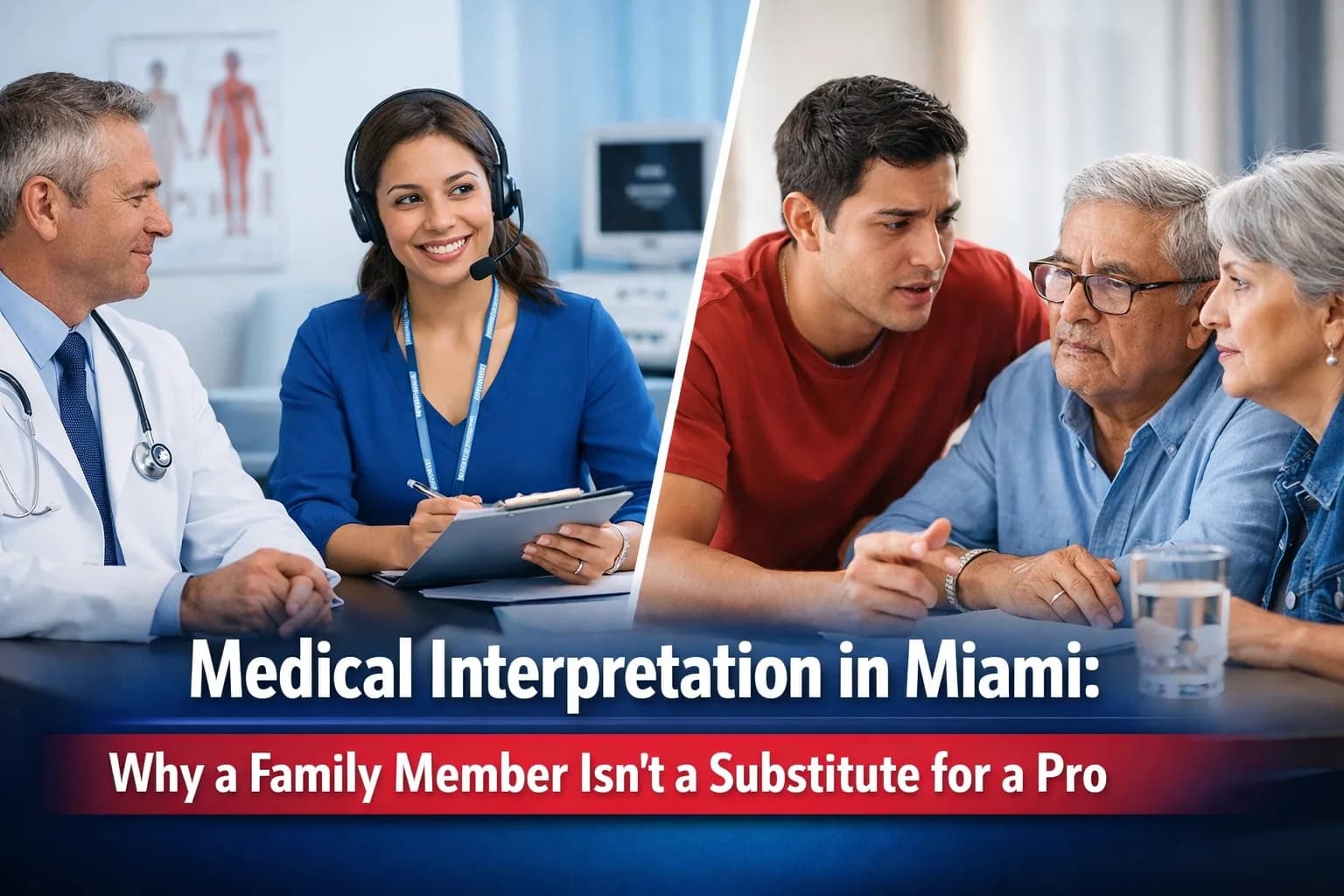
Picture this: You’re in a Jackson Memorial Hospital exam room with your elderly mother, who speaks limited English. The doctor starts explaining a complex diagnosis, and naturally, you step in to translate. It feels like the right thing to do: you know your mom, you speak both languages, and you want to help. But here’s what most people don’t realize: using a family member as a medical interpreter can actually put patients at serious risk.
In Miami’s diverse healthcare landscape, where over 70% of residents speak a language other than English at home, the temptation to rely on bilingual family members is everywhere. But there’s a massive difference between being bilingual and being a qualified medical interpreter. Let’s break down why that difference matters: and why it could literally be a matter of life and death.
The Real Risks of Using Family Members as Medical Interpreters
When your daughter translates “take one pill twice daily” as “take two pills once a day,” it might seem like a small mistake. But in healthcare, these seemingly minor errors can have devastating consequences. Family members, no matter how well-intentioned, typically lack the specialized training to accurately interpret complex medical terminology.

Consider what happened at a Miami clinic in Little Havana last year. A Spanish-speaking patient’s son misunderstood the doctor’s instructions about a chemotherapy regimen. The confusion led to incorrect dosing, a hospital readmission, and significant complications that could have been avoided with a professional interpreter. This isn’t an isolated incident: research shows that medical errors due to language barriers are more common than you’d think.
Here’s what goes wrong when family members interpret:
Medical terminology gets lost in translation. Words like “hypertension,” “benign,” or “malignant” have specific meanings that don’t always translate directly. A family member might simplify or misunderstand these terms, leading to dangerous miscommunication.
Emotional involvement clouds judgment. When it’s your parent or spouse receiving a difficult diagnosis, staying neutral and accurate becomes nearly impossible. Family interpreters often filter information to protect their loved ones, leaving out critical details the doctor needs to know.
Privacy gets compromised. Would your teenage daughter feel comfortable discussing her symptoms with her father in the room, translating? Probably not. Family interpreters can create barriers to honest communication, especially around sensitive topics like mental health, sexual health, or substance use.
Children bear adult burdens. Kids are frequently called upon to interpret for their parents in Miami’s immigrant communities. This puts them in inappropriate situations, exposing them to medical information they’re not emotionally equipped to handle while simultaneously placing enormous responsibility on their shoulders.
What Professional Medical Interpreters Actually Do
Professional medical interpreters aren’t just bilingual: they’re trained specialists who understand the nuances of healthcare communication. In Miami, certified interpreters must complete at least 40
hours of specialized training covering medical terminology, interpreting techniques, and clinical protocols. They also need to pass rigorous national certification exams that test their medical knowledge, ethics, and interpreting skills.

These professionals maintain fluency at a level 3 or higher in both English and their target language, assessed through certified evaluations. More importantly, they understand the ethics of medical interpretation. They know how to remain neutral, maintain confidentiality, and accurately convey both the words and the intent of what’s being said.
A professional interpreter in a consultation at Mount Sinai Medical Center or Baptist Health will position themselves to facilitate direct communication between the patient and the provider. They’re trained to interpret everything said: not summarize or filter: and to flag when cultural context might affect understanding. They understand medical procedures, can handle emergency situations, and know when to ask for clarification.
The Legal and Ethical Implications
Here’s something that catches many Miami healthcare providers off guard: federal law actually requires effective communication with patients who have limited English proficiency. Under Title VI of the Civil Rights Act and the Affordable Care Act, hospitals and clinics receiving federal funding must provide language assistance services.
Using family members as interpreters doesn’t satisfy this legal requirement. In fact, relying on untrained interpreters can expose healthcare facilities to liability if something goes wrong. Miami hospi-
tals have faced lawsuits when interpretation errors led to patient harm, and the consequences aren’t just financial: they damage trust in our healthcare system.
The medical ethics are equally clear. The American Medical Association and other healthcare organizations discourage using family members as interpreters except in emergency situations where no alternative exists. These guidelines recognize that accurate communication is foundational to informed consent, proper diagnosis, and effective treatment.

Miami’s Unique Healthcare Language Needs
Miami’s linguistic diversity makes professional interpretation especially critical here. We’re talking about a metropolitan area where Spanish, Haitian Creole, Portuguese, Russian, and dozens of other languages are spoken daily. Hospitals in Hialeah, Kendall, and downtown Miami serve patient populations with incredibly varied language needs.
The stakes are higher in certain medical settings. In Coral Gables fertility clinics, precision matters when discussing complex procedures. In trauma centers across Miami-Dade, emergency situations demand immediate, accurate communication. In Aventura’s senior care facilities, elderly patients need interpreters who understand age-related health issues and can communicate with appropriate sensitivity.
Professional interpretation services in Miami have adapted to these needs. Many organizations now offer on-demand interpretation via video or phone, making professional interpreters accessible 24/7. For scheduled appointments at clinics throughout Miami Beach, Coconut Grove, or anywhere else in the county, in-person certified interpreters can be arranged in advance.
When Family Interpretation Creates Dangerous Gaps
Let’s get specific about where things typically go wrong. In mental health settings, using family members to interpret therapy sessions is particularly problematic. Patients won’t disclose domestic violence, depression, or trauma to their spouse translating. Psychiatrists in Miami regularly report that family interpretation prevents accurate mental health assessment and treatment.
In pediatric care at Nicklaus Children’s Hospital or other Miami pediatric facilities, parents need to hear directly from doctors about their child’s condition. When a sibling interprets, critical nuances about medication dosages, warning signs, or follow-up care often get lost. Kids might not understand the importance of certain instructions or might be too stressed to interpret accurately.
Surgical consent forms present another major issue. These documents contain complex legal and medical language that requires precise interpretation. Having a family member explain surgical risks or post-operative care instructions doesn’t constitute true informed consent. Professional interpreters ensure patients genuinely understand what they’re agreeing to before any procedure.
The Business Case for Professional Interpretation
For Miami healthcare providers, professional interpretation isn’t just about compliance: it’s good business. Patients who can communicate effectively with their providers have better health outcomes, follow treatment plans more accurately, and report higher satisfaction with their care. This translates to fewer readmissions, better quality scores, and stronger patient loyalty.
Healthcare organizations throughout Miami-Dade have discovered that investing in professional interpretation services actually reduces costs over time. Preventing one medication error or misdiagnosis more than pays for interpretation services. Avoiding legal liability is another significant financial consideration.
From a patient perspective, knowing that your doctor’s office provides professional interpreters builds trust. Miami’s immigrant communities are more likely to seek necessary medical care when language barriers are properly addressed. This leads to earlier detection of health issues and better preventive care, benefiting both individual patients and public health overall.
How to Access Professional Medical Interpretation in Miami
If you’re a healthcare provider in Miami, connecting with certified interpretation services is straightforward. Organizations like International Translations USA offer medical interpretation in multiple languages with certified professionals who understand healthcare settings. Services can be scheduled in advance or accessed on-demand for urgent situations.
For patients, don’t hesitate to request a professional interpreter when scheduling appointments. Under federal law, you have the right to language assistance at no cost to you when receiving care at most Miami hospitals and clinics. This applies whether you’re visiting a major medical center downtown or a community health clinic in Sweetwater.
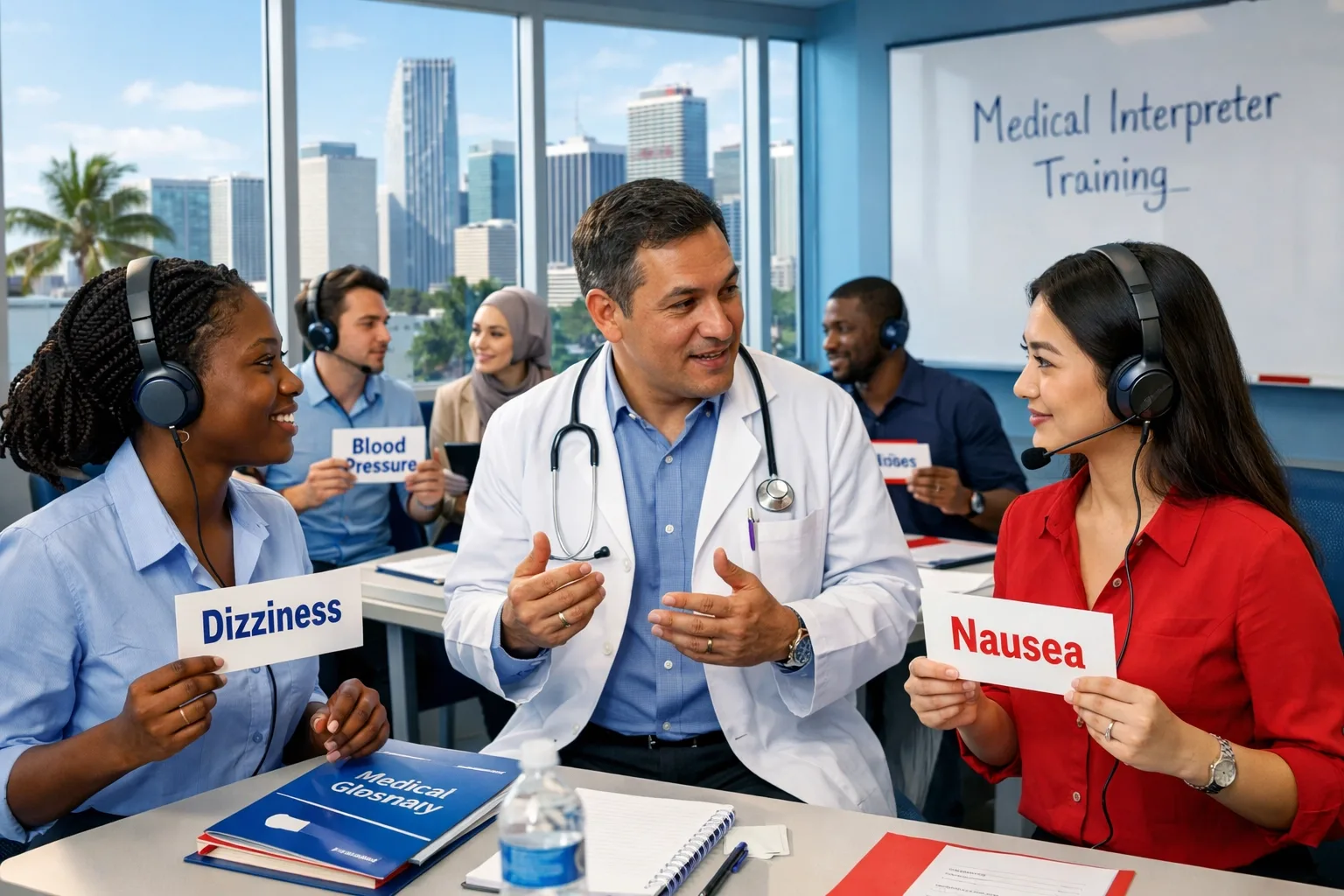
Training programs at Miami Dade College and Florida International University produce qualified medical interpreters right here in South Florida. These locally-trained professionals understand Miami’s cultural context while meeting rigorous national standards for medical interpretation.
Moving Forward: Building a Culture of Professional Interpretation
Miami’s healthcare community is increasingly recognizing that professional interpretation is essential, not optional. Progressive medical practices throughout the area are building interpretation services into their standard protocols rather than treating it as an afterthought.
This shift protects patients, supports healthcare providers, and upholds the ethical standards our medical system is built on. When your family member needs medical care and doesn’t speak fluent English, insisting on a professional interpreter isn’t being difficult: it’s being smart. It ensures accurate communication, respects patient privacy, and provides the best possible foundation for quality healthcare.
The bottom line is simple: medical interpretation is a specialized skill that requires training, certification, and ongoing professional development. Your bilingual cousin might be great at many things, but accurately interpreting a complex medical consultation isn’t one of them. When health is on the line, Miami patients deserve professional interpretation services that meet the highest standards of accuracy, ethics, and care.
Need professional medical interpretation services in Miami? Contact International Translations USA to connect with certified interpreters who can facilitate clear, accurate communication in healthcare settings throughout Miami-Dade County.
ITU Translation Services
ATA corporate member and BBB A+ rated translation agency in Miami, FL. Certified translations in 120+ languages, accepted by USCIS, courts and institutions nationwide since 2017.



Need a certified translation?
Free quote in minutes — USCIS acceptance guaranteed.