USCIS Interview Prep: Why Bringing the Right Interpreter is Just as Critical as Your Translated Documents
By ITU Translation Services · Published 2026-01-23 · Updated 2026-04-03
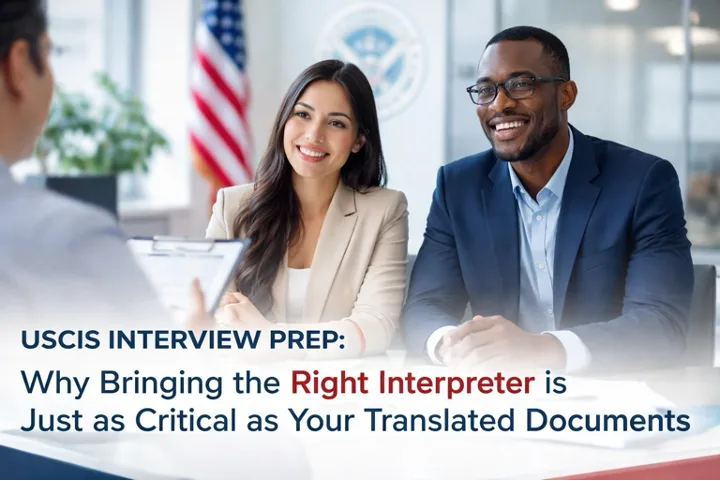
You’ve spent weeks gathering your documents. Your birth certificate, marriage license, and employment records have all been professionally translated and certified. You feel prepared for your USCIS interview. But have you thought about who will interpret for you during the actual conversation?
Here’s something many Miami applicants overlook: your interpreter can make or break your immigration case just as easily as a poorly translated document. Every word spoken during your interview becomes part of your permanent immigration record. Unlike a document that can be reviewed and corrected before submission, real-time interpretation shapes how the officer perceives your credibility in the moment.
If you’re preparing for an interview at one of Miami’s USCIS field offices, understanding the difference between a qualified interpreter and an unqualified one could be the difference between approval and a complicated delay.
How Interpreters Impact Your USCIS Interview Outcome
The interpreter’s job goes far beyond converting Spanish, Creole, Portuguese, or any other language into English. This person serves as the communication bridge between you and the USCIS officer making decisions about your future in the United States.
USCIS requires interpreters to translate everything verbatim: word for word: without adding opinions, commentary, or their own answers. Your interpreter must also complete Form G-1256, the Declaration for Interpreted USCIS Interview, swearing under penalty of perjury that they will interpret “accurately, literally, and fully.”

That legal obligation exists for good reason. Even small translation errors can create inconsistencies in your testimony. An officer might interpret those inconsistencies as credibility issues, which can directly threaten your case outcome.
Think about it this way: if your certified translated documents establish the facts of your case, your interpreted statements establish your character and truthfulness. Both elements work together to build your credibility before the officer.
What to Expect at Miami USCIS Field Offices
Miami-Dade County is home to one of the busiest USCIS field offices in the country, located at 8801 NW 7th Avenue. Applicants from Kendall, Hialeah, Miami Beach, Doral, and surrounding areas all funnel through this office for interviews ranging from green card applications to naturalization ceremonies.
Given Miami’s incredibly diverse population: with large communities speaking Spanish, Haitian Creole, Portuguese, Russian, and dozens of other languages: USCIS officers here are accustomed to working with interpreters. However, that familiarity also means they’re experienced at spotting interpretation problems.
Officers at Miami field offices have absolute discretion to disqualify interpreters during your interview if they believe the person isn’t competent or if the interview’s integrity could be compromised. If your interpreter gets rejected, your interview may be rescheduled entirely: adding weeks or months to your timeline. Alternatively, the officer might arrange last-minute telephonic interpretation with someone you’ve never met or tested.
Neither scenario is ideal when your immigration status hangs in the balance.
The Hidden Risks of Using Family Members as Interpreters
It’s tempting to bring your bilingual cousin, adult child, or family friend to interpret for you. After all, they know you, they speak both languages, and it’s free. What could go wrong?
Quite a lot, actually.
While USCIS technically allows family members to serve as interpreters (with officer discretion), this approach carries significant risks that many applicants don’t consider:
Lack of Impartiality: USCIS requires interpreters to be neutral third parties with no personal interest in your case outcome. A family member has an obvious emotional and often financial stake in your approval. Officers know this and may view their interpretation with skepticism.
No Training in Legal Terminology: Immigration interviews involve complex legal concepts and specific terminology. Your nephew who learned English in school probably hasn’t practiced interpreting phrases like “continuous physical presence” or “good moral character” under pressure.
Emotional Involvement: When questions get difficult or personal: and they often do: a family member may unconsciously soften your answers, leave out uncomfortable details, or add context you didn’t provide. Even well-intentioned changes to your testimony can create credibility problems.
Automatic Disqualifications: Certain people cannot serve as your interpreter under any circumstances. Your attorney, any witnesses in your case, and minors under 14 are automatically prohibited. Some applicants don’t learn about these restrictions until they’re sitting in the waiting room.
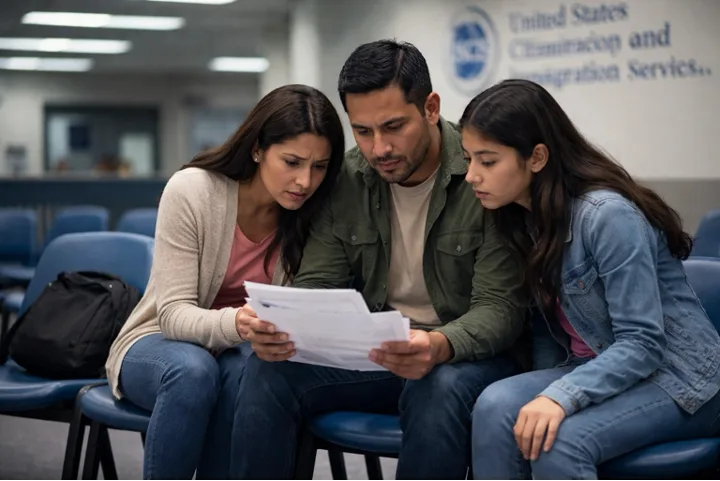
If you’ve already invested in professional document translation services in Miami, FL to ensure your paperwork is accurate, it makes sense to apply the same standard to your interpretation.
What Makes a Qualified USCIS Interpreter?
While no government certification is specifically required to interpret at USCIS interviews, certain qualifications separate reliable interpreters from risky choices:
Demonstrated Fluency: Your interpreter must be genuinely fluent in both English and your native language: not just conversational. Immigration vocabulary requires precision that casual bilingualism doesn’t provide.
Impartiality: A qualified interpreter maintains professional neutrality throughout your interview, translating exactly what you say without editing, summarizing, or adding their perspective.
Experience with Immigration Contexts: Interpreters who regularly work with USCIS interviews understand the process, the types of questions asked, and how to handle difficult moments professionally.
Accuracy Under Pressure: Real-time interpretation doesn’t allow for do-overs. Your interpreter needs the skill and composure to translate accurately even when questions are rapid, confusing, or emotionally charged.
Professional interpreters working with a trusted Miami translation service bring all of these qualifications to your interview: along with the peace of mind that comes from knowing you’ve minimized preventable risks.
Actionable Prep Tips for Your USCIS Interview
Beyond choosing the right interpreter, here’s how to set yourself up for success at your Miami USCIS interview:
1. Meet Your Interpreter Before Interview Day
If possible, schedule a brief meeting or phone call with your interpreter before your appointment. This gives you both a chance to get comfortable with each other’s speaking pace, accent, and communication style. You can also review any unusual names, places, or terminology that might come up.
2. Review Your Translated Documents Together
Bring copies of all your certified translated documents and review them with your interpreter beforehand. This helps them anticipate the topics you’ll discuss and ensures consistency between your written evidence and spoken testimony.
3. Practice Speaking Clearly and Pausing
During your interview, speak in short, complete sentences and pause between thoughts. This gives your interpreter time to translate accurately without rushing or guessing at incomplete statements.

4. Never Answer Questions You Don’t Understand
If a question confuses you: even after interpretation: ask for clarification. It’s far better to request a repeat than to answer something you misunderstood. A good interpreter will translate your request without judgment.
5. Prepare for Common Interview Topics
Depending on your application type, expect questions about your employment history, family relationships, travel, and the details contained in your supporting documents. Reviewing these topics with your interpreter can help both of you feel prepared.
6. Have a Backup Plan for Last-Minute Emergencies
If your interpreter has an emergency and can’t attend, you need options. Working with a professional Miami translation service that offers both document translation and interpretation services means you have support available even in urgent situations.
Protecting Your Case with Professional Support
Your USCIS interview represents a critical moment in your immigration journey. The documents you submit establish the factual foundation of your case, but your real-time testimony: filtered through your interpreter: shapes the officer’s impression of you as a person.
Choosing an unqualified interpreter to save money is a gamble that can cost you far more in delays, denials, or damaged credibility. Miami applicants who take their interviews seriously invest in professional support for both their translated documents and their interpretation needs.
At International Translations USA, we understand what’s at stake. Our team provides USCIS certified translation services in Miami alongside professional interpretation support, ensuring consistency and accuracy across every aspect of your application.
If your interview is approaching and you want to make sure you’re fully prepared, request a free quote to discuss your document translation and interpretation needs. Our Miami-based team is ready to help you walk into that interview with confidence.
ITU Translation Services
ATA corporate member and BBB A+ rated translation agency in Miami, FL. Certified translations in 120+ languages, accepted by USCIS, courts and institutions nationwide since 2017.


Need a certified translation?
Free quote in minutes — USCIS acceptance guaranteed.