The Miami Immigrant’s Guide to Form G-1256 and USCIS Interpreter Requirements in 2026
By ITU Translation Services · Published 2026-02-05 · Updated 2026-04-03
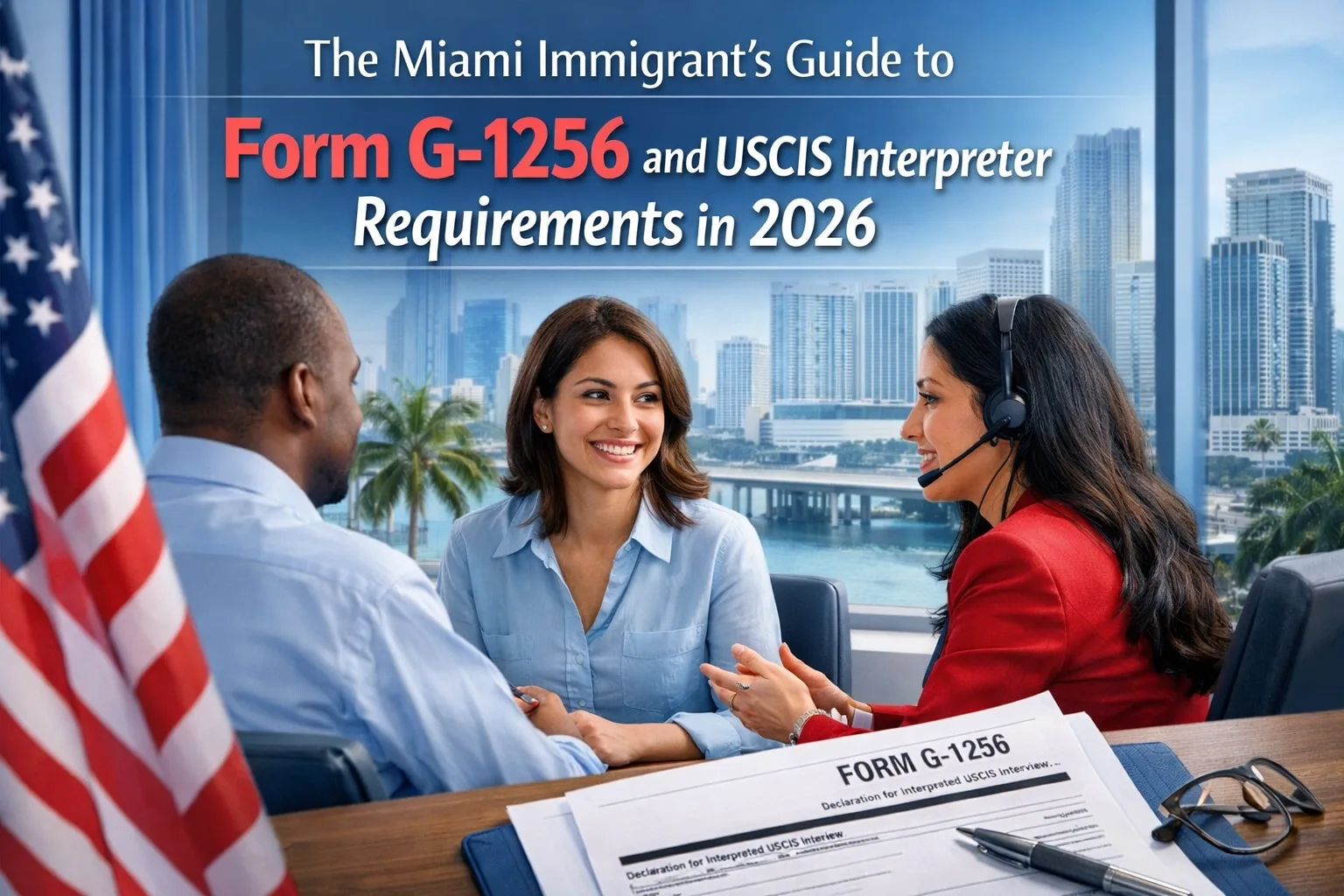
If you’ve got a USCIS interview scheduled at the Miami, Hialeah, or Kendall field office, you might already be feeling the nerves. And if English isn’t your first language, there’s an extra layer of stress: finding the right interpreter and understanding Form G-1256.
Here’s the thing: since September 2025, USCIS stopped providing interpreters for most interviews. That means it’s on you to bring someone qualified, and the stakes are higher than you might think. A good interpreter can make your interview smooth and clear. The wrong one? That could delay your case or worse.
Let’s break down everything Miami immigrants need to know about Form G-1256, interpreter requirements, and how to prepare for your big day—including USCIS interview preparation basics that can help you avoid last-minute surprises.
What Exactly Is Form G-1256?
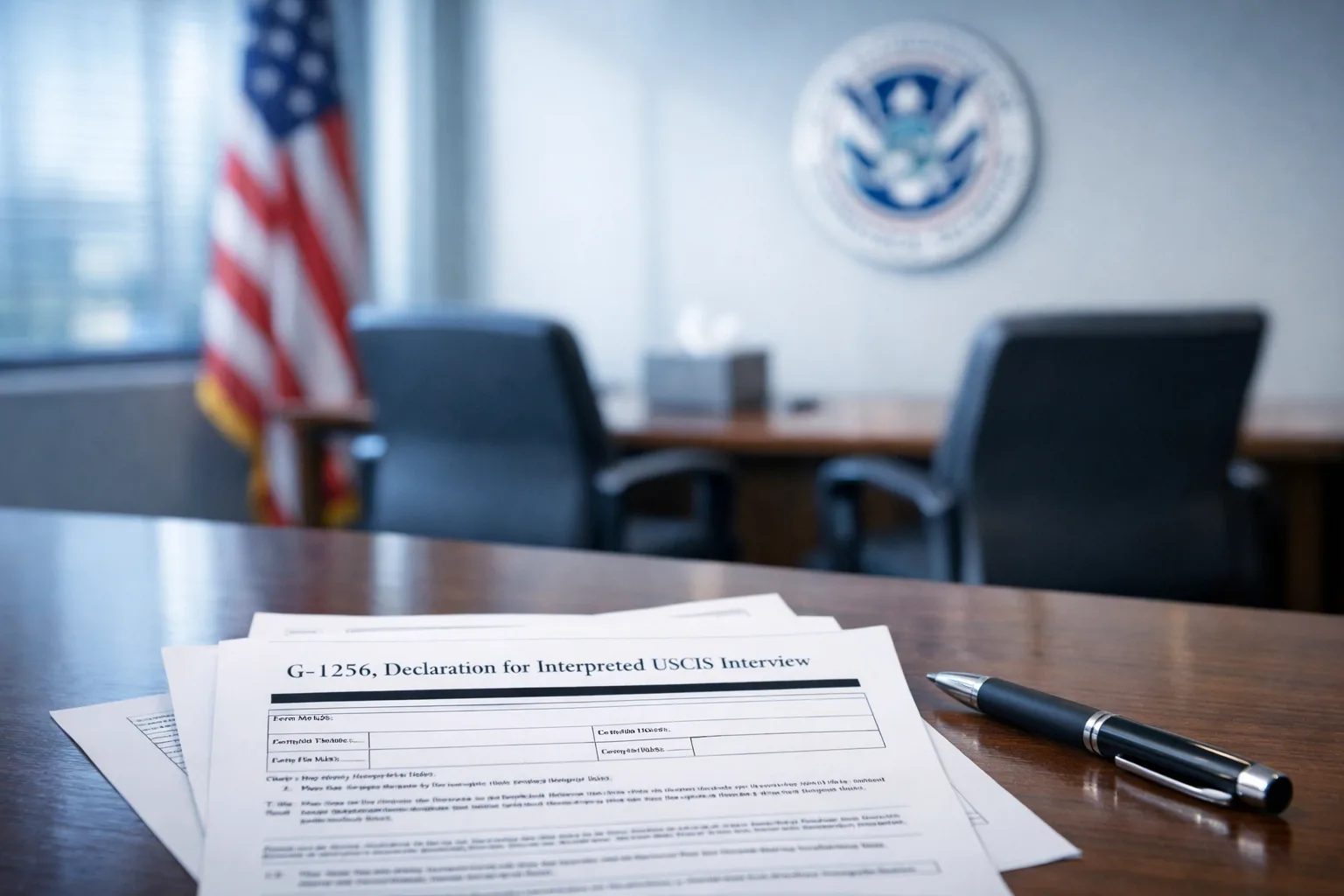
Form G-1256, officially called the “Declaration for Interpreted USCIS Interview,” is a legal document that both you and your interpreter must sign before your interview starts. Think of it as a contract that puts your interpreter under oath.
When your interpreter signs this form, they’re agreeing to:
- Interpret everything accurately, literally, and completely
- Remain impartial throughout the interview
- Keep all your personal information confidential
- Face legal consequences if they lie or misrepresent anything
The USCIS officer will have you and your interpreter sign this form at the very beginning of your interview, right after administering the oath. It’s not optional; if you need an interpreter, you’re using this form.
The Big Change: USCIS No Longer Provides Interpreters
This is probably the most important update for 2026. As of late 2025, USCIS field offices across South Florida, including Miami, Hialeah, and Kendall, no longer provide free interpreters for standard interviews.
This policy applies to:
- Adjustment of Status interviews (green card applications)
- Naturalization interviews (citizenship)
- Asylum interviews at field offices
- Most other in-person USCIS proceedings
The only exception? USCIS still provides American Sign Language (ASL) interpreters free of charge for deaf or hard-of-hearing applicants, as required by federal accessibility laws.
For everyone else, you’re responsible for finding, and paying for, your own interpreter.
Who Can Actually Serve as Your Interpreter?
Here’s where things get tricky. Not just anyone can interpret at your USCIS interview, and the officer conducting your interview has full authority to reject your interpreter if they don’t meet the requirements.
Your interpreter must be:
- At least 18 years old
- Fluent in both English and your native language
- Able to interpret complex legal and immigration terminology accurately
- Completely impartial with no personal stake in your case outcome
Your interpreter cannot be:
- Your immigration attorney or legal representative
- Anyone who will testify as a witness in your case
- A minor (anyone under 14, with rare exceptions for ages 14-17)
- Someone with limited English proficiency themselves
One common mistake we see at our Miami translation service is people assuming their attorney can interpret for them. This is strictly prohibited because your attorney needs to advocate for you, not just translate. The roles conflict.
Friend or Family Member vs. Professional Interpreter: What’s the Difference?
Technically, USCIS allows you to bring a trusted family member or friend as your interpreter. But here’s the reality: this can be risky.
Why a friend or family member might not be your best choice:
- They may lack knowledge of legal terminology
- USCIS officers can (and do) question their impartiality
- They might unintentionally misinterpret important questions
- Nervousness or emotional involvement can affect their performance
- They could be disqualified on the spot, forcing you to reschedule
Why a professional interpreter is the safer bet:
- They have formal training in interpretation techniques
- They understand legal and immigration terminology
- They demonstrate clear impartiality
- USCIS officers rarely challenge their qualifications
- They know how to handle complex, sensitive questions
If you’re applying for adjustment of status or naturalization in Miami, investing in a professional interpreter isn’t just smart; it’s essential insurance for your case. Similar to how you wouldn’t skip getting certified translations for your documents, you shouldn’t cut corners on interpretation.
How Miami USCIS Officers Evaluate Your Interpreter
When you show up at the Miami USCIS field office on NW 7th Street, the Hialeah office, or the Kendall location, the interviewing officer will assess your interpreter before the interview even begins.
They’re looking for:
- Language fluency: Can the interpreter handle both casual conversation and complex legal terms?
- Impartiality: Does the interpreter have any obvious bias or personal connection that could compromise the interview?
- Professionalism: Is the interpreter prepared, respectful, and capable of handling the responsibility?
If the officer has any doubts about your interpreter’s abilities or neutrality, they have absolute discretion to disqualify them. When that happens, your interview gets rescheduled, which can delay your case by months.
We’ve seen this happen to Miami applicants who brought well-meaning friends who just weren’t prepared for the technical nature of immigration interviews.
Remote Interpretation: Is It Allowed?
Yes, USCIS does accept remote interpretation, but there are important differences between your options.
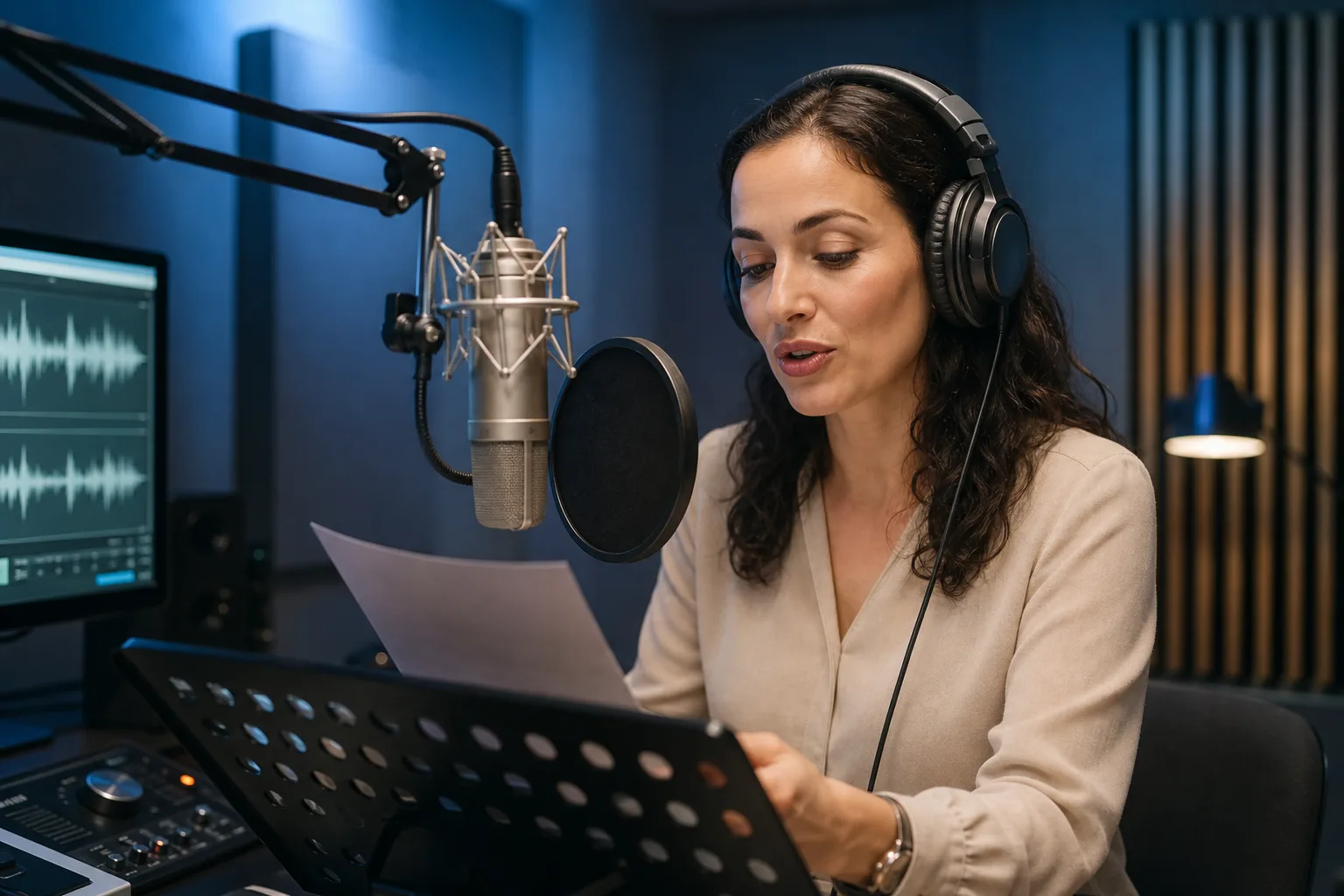
Video Remote Interpretation (VRI) is generally preferred because the officer can see both you and the interpreter, preserving non-verbal communication that’s crucial for credibility assessments.
Phone interpretation is also permitted but less ideal since the officer can’t observe body language or facial expressions.
If you’re considering remote interpretation for your Miami USCIS interview, discuss it with the office in advance to ensure they can accommodate the technology setup
Step-by-Step: How to Prepare for Your Interpreted Interview
Assess Your Language Needs Early
Be honest about your English proficiency. Even if you speak conversational English, immigration interviews involve complex legal concepts. If there’s any doubt, plan to use an interpreter.
Find a Qualified Interpreter Well in Advance
Don’t wait until the week before your interview. Professional interpreters in Miami book up quickly, especially for common languages like Spanish, Haitian Creole, and Portuguese.
Brief Your Interpreter on Your Case
Share background information about your immigration journey, the types of questions you expect, and any sensitive topics that might come up. A prepared interpreter performs better.
Download and Review Form G-1256
You can find Form G-1256 on the USCIS website. While you’ll likely complete it at the interview, reviewing it ahead of time helps you understand what you and your interpreter are committing to.
Confirm Logistics
Make sure your interpreter knows the exact date, time, and location of your interview. Miami traffic can be unpredictable, so plan to arrive early. If you’re going to the Kendall office during rush hour, add extra time.
Prepare for Questions About Your Interpreter
The USCIS officer may ask how you know your interpreter and why you chose them. Have a straightforward answer ready.
What Happens If Something Goes Wrong?
If your interpreter makes significant errors during the interview, it could constitute a due process violation. In serious cases, this might give you grounds to challenge an unfavorable decision.
However, prevention is always better than correction. That’s why choosing a qualified, professional interpreter from the start matters so much.
For Miami immigrants, working with a reputable USCIS translation Miami provider who also offers interpretation services ensures consistency across all your immigration needs, from certified document translations to professional interpretation.
Miami-Specific Tips for Your USCIS Interview
Know Your Field Office Location
- Miami USCIS Field Office: 7880 Biscayne Boulevard (near the Upper East Side)
- Hialeah USCIS Office: Serves Northwest Miami-Dade applicants
- Kendall USCIS Office: Convenient for South Miami-Dade residents
Each office has slightly different parking and security procedures, so check ahead.
Account for Miami Traffic
Whether you’re coming from Coral Gables, Doral, or Miami Beach, give yourself plenty of buffer time. Missing your interview because of I-95 traffic isn’t an excuse USCIS will accept.
Bring All Required Documents
Along with Form G-1256 and your interpreter, bring all requested documents in their original form plus certified translations. If you haven’t gotten your documents professionally translated yet, Miami has several options, but quality matters more than speed.
The Bottom Line for Miami Immigrants
Form G-1256 and the new interpreter requirements might seem like one more hurdle in an already complicated process, but they’re actually designed to protect you. Having a qualified interpreter ensures that you understand every question and that USCIS understands every answer.
For Miami’s diverse immigrant community, whether you speak Spanish, Haitian Creole, Portuguese, Russian, or any other language, these requirements level the playing field. You deserve the same fair interview process as native English speakers.
The key is preparation. Don’t leave your interpreter situation to the last minute. Don’t assume a bilingual friend is automatically qualified. And definitely don’t show up without Form G-1256 ready to go.
If you’re navigating the USCIS process in Miami and need certified translations, interpretation services, or guidance on document requirements, reach out to professionals who understand both the technical requirements and the local Miami context.
Your immigration interview is too important to leave anything to chance. With the right preparation and the right interpreter, you’ll walk into that Miami, Hialeah, or Kendall field office ready to present your best case.
ITU Translation Services
ATA corporate member and BBB A+ rated translation agency in Miami, FL. Certified translations in 120+ languages, accepted by USCIS, courts and institutions nationwide since 2017.

Need a certified translation?
Free quote in minutes — USCIS acceptance guaranteed.