Video Remote Interpreting: When It Fits and What to Check
By ITU Translation Services · Published 2026-11-09
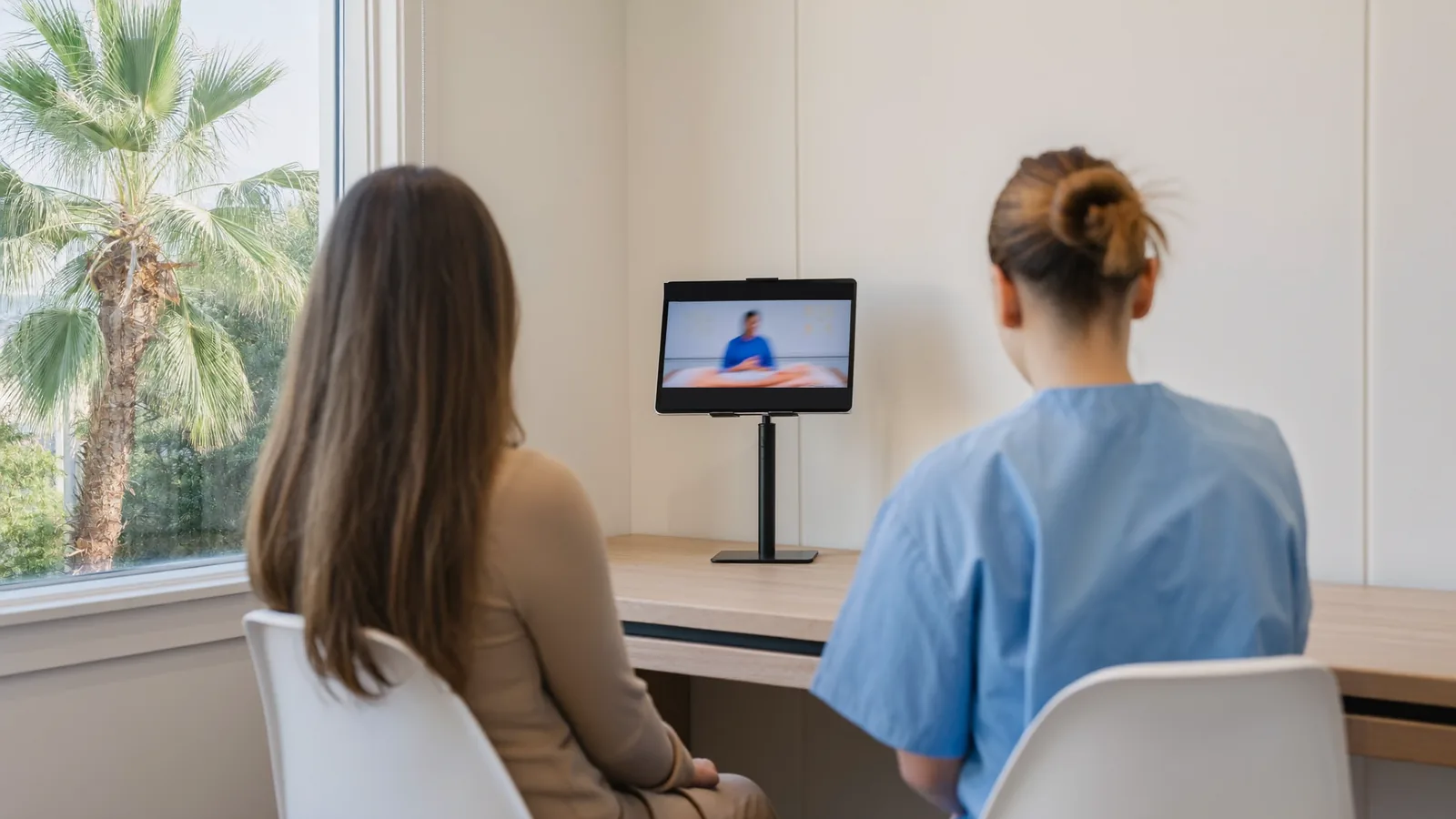
Quick Summary: Video remote interpreting (VRI) connects you to an off-site interpreter by live video. It can work well when an on-site interpreter is hard to schedule or when seeing faces and gestures matters, but it does not fit every setting. In covered settings, federal standards set video and sound requirements when a covered health program provides a qualified interpreter by video for a person with limited English proficiency, or when a covered public accommodation provides VRI for effective communication with a person with a disability. An on-site interpreter may still be the better choice.
If you need an interpreter for an appointment, meeting or hearing, video remote interpreting is one of three ways to get one. Our interpretation services cover video, phone and on-site interpreting, in 120+ languages. This guide explains what each option does well, which federal standards may apply to a video setup in covered settings, and what to ask a provider before you book.
What is video remote interpreting?
Video remote interpreting is an interpreter who joins your conversation by live video from another location. ADA.gov describes VRI in the context of communication with people who are deaf or have hearing loss. More broadly, spoken-language interpreters may also join conversations by video. The interpreter sees and hears the participants through a screen, a camera and a speaker, and interprets as the conversation happens.
It is one of three common formats:
- On-site interpreting: the interpreter is in the room with you.
- Phone interpreting: the interpreter joins by audio only. The federal healthcare rule calls this "audio remote interpreting."
- Video remote interpreting: the interpreter joins by video and audio.
The difference that matters most is what the interpreter can see. On a phone call, an interpreter hears voices but cannot see participants; video can provide visual cues.
When does video remote interpreting fit better than phone or on-site?
Video can fit when you need to see the person and an interpreter cannot easily travel. These are general considerations, not rules. The right format depends on the communication needs, the complexity of the conversation and the context, so your own setting decides.
- Unplanned or short-notice conversations. Video can make it possible to bring in an interpreter without travel, depending on availability.
- Remote or distant locations. ADA.gov says VRI can be especially useful in rural areas where on-site interpreters may be difficult to obtain.
- Conversations where facial expressions matter. A video interpreter can see the speaker's face and gestures. A phone interpreter cannot.
- Telehealth and remote meetings. If everyone is already on a video call, adding an interpreter to the same call may be an option.
- Language pairs that are hard to find locally. A remote provider may be able to draw on interpreters outside your city. Confirm availability for your language and date.
Phone interpreting is another format. Whether it is adequate depends on the communication needs, the complexity and the context, and any format has to allow effective communication and language access. For a courtroom, deposition or mediation, ask the court or proceeding administrator and counsel what requirements apply to remote interpreting before you plan on video. Our guide to certified legal interpretation in Miami explains how those settings work.
When should you choose an on-site interpreter instead?
On-site may fit better when the screen would get in the way. ADA.gov gives one clear example: VRI will not be effective if the person who needs the interpreter has difficulty seeing the screen, because of vision loss or because an injury or other condition keeps them from being positioned to see it. In that case, an on-site interpreter may be required.
Other situations may also call for someone in the room, depending on your needs. Treat these as considerations, not automatic requirements:
- A long, complex or high-stakes session with many speakers
- A setting where people handle paper documents or equipment together
- A location with an unreliable internet connection or poor sound
- A participant who is uncomfortable with a screen
If you are not sure, tell the provider about the setting, the number of participants and the length of the session.
What should a video interpreting setup include?
A video interpreter only helps if the connection is good enough to be useful. Two federal rules spell out standards for video interpreting, and each applies only in specific circumstances. When a covered health program provides a qualified interpreter by video for a person with limited English proficiency, the HHS rule (45 CFR 92.201(f)) sets requirements and says the modality must allow meaningful access. When a covered public accommodation chooses to provide VRI for effective communication with a person with a disability, the Department of Justice's ADA rule (28 CFR 36.303(f)) sets requirements. They list similar items:
- Real-time, full-motion video and audio over a dedicated high-speed, wide-bandwidth video connection or wireless connection, with no lags, choppy, blurry or grainy images, or irregular pauses.
- A sharply delineated image large enough to show the faces of the interpreter and the participant regardless of body position. The ADA rule also requires showing the arms, hands and fingers of both the interpreter and the participating individual, which matters for sign language.
- Clear, audible transmission of voices.
- Adequate training for the people who use the technology, so they can set it up and run it quickly.
Test the setup before the session, not during it. Meeting these technical standards alone does not make video suitable for every patient or situation: meaningful access and effective communication matter too.

Can a family member or staff member interpret over video instead?
Sometimes, but covered healthcare entities face specific limits. Under 45 CFR 92.201(e), a covered entity must not require a patient with limited English proficiency to bring or pay for their own interpreter. The rule then treats three groups separately:
- Accompanying adults: the rule restricts reliance on an adult who is not qualified as an interpreter. Limited exceptions, including for certain emergencies and for a patient's private, documented request, each have specific conditions that must all be met.
- Minor children: the rule restricts reliance on a minor child. A limited emergency exception has specific conditions, and the adult-request exception does not apply to minors.
- Staff: a covered entity must not rely on staff other than qualified interpreters, qualified translators or qualified bilingual or multilingual staff. Separately, when interpretation services are required, the rule requires the entity to offer a qualified interpreter (45 CFR 92.201(c)).
Consult the rule and your compliance team about your own setting. Our guide to language access laws in Miami healthcare and our article on why a family member is not a substitute cover this in more detail.
What should you ask a provider before booking?
Ask how the session will run, then ask what happens if it does not. These questions help you compare providers on the points that affect your appointment:
- Which languages can the provider cover by video, and which by phone only?
- What equipment and internet connection does the session need on your side?
- How are interpreters qualified for your setting, such as medical, legal or business?
- How does the provider protect the privacy of the conversation?
- What is the backup plan if video fails mid-session, and is it adequate for the communication needs of that session?
- Who helps set up and test the connection before the start time?
Get the answers in writing, and confirm availability for your date and language.
Frequently Asked Questions
Is video remote interpreting the same as video relay service?
No. ADA.gov describes video relay service as a free, subscriber-based service that helps a person who uses sign language place phone calls, with the interpreter in the middle of a call with someone on a standard voice telephone. Video remote interpreting is arranged by an organization so an off-site interpreter can join its own appointment or meeting.
Can video interpreting be used for medical appointments?
It can be, when it is arranged properly. When a covered health program provides a qualified interpreter by video for a patient with limited English proficiency, 45 CFR 92.201(f) requires the modality to allow meaningful access and sets the video, sound and training requirements above. Providers should confirm their own obligations with their compliance team or counsel.
Is video or phone interpreting better?
It depends on the communication needs, the complexity of the conversation and the context. Video lets the interpreter see faces and gestures, so it can fit when nonverbal cues matter. Phone interpreting is another format. Whichever you choose, it has to allow effective communication, so ask your provider which format suits your setting.
Does ITU offer video interpreting?
Yes. According to our interpretation services page, ITU provides video and phone interpreting nationwide and on-site interpreting in South Florida, including video remote interpreting for medical settings. Tell us your language, setting and date in the quote form so we can confirm what is available.
Need an interpreter for an appointment or meeting?
Tell us the language, the setting and whether you prefer video, phone or on-site. We will confirm the options and send your quote. Get Free Quote, or call (305) 747-5996.
This article is general information, not legal advice. Accessibility, healthcare and court requirements differ by setting and change over time. Confirm what applies to you with your compliance team, the court or an attorney.
Sources

ITU Translation Services
ATA corporate member and BBB A+ rated translation agency in Miami, FL. Certified translations in 120+ languages, accepted by USCIS, courts and institutions nationwide since 2017.


Need a certified translation?
Free quote in minutes — USCIS acceptance guaranteed.