Medical Interpretation vs. Medical Translation: What Miami Healthcare Providers Need to Know
By ITU Translation Services · Published 2026-05-25 · Updated 2026-06-01
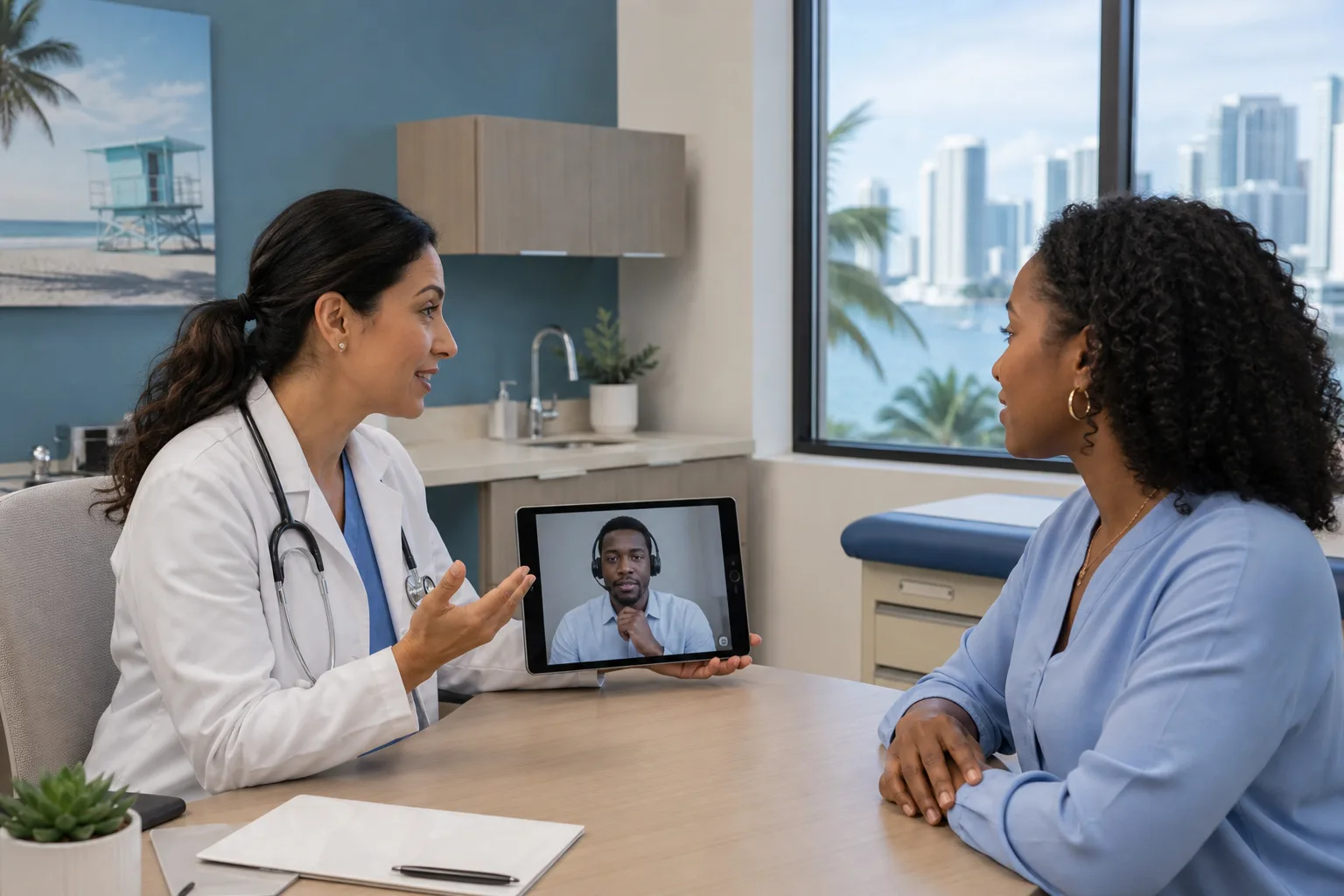
Miami is one of the most linguistically diverse cities in the United States. Patients at Jackson Memorial Hospital, Baptist Health, and Nicklaus Children’s Hospital arrive speaking dozens of languages — Spanish, Haitian Creole, Portuguese, Mandarin, Arabic, and more. When healthcare providers need to communicate across language barriers, two services come into play: medical interpretation and medical translation. These terms are often used interchangeably, but they describe fundamentally different services — and choosing the wrong one at the wrong time can have serious consequences.
This guide explains the distinction between medical interpretation and medical translation, when each service applies, and how Miami healthcare organizations can build a compliant, effective multilingual communication strategy.
What Is Medical Interpretation?
Medical interpretation involves converting spoken (or signed) language in real time. A medical interpreter facilitates live communication between a healthcare provider and a patient who speaks a different language. This can happen:
- In person, with the interpreter physically present in the exam room or operating area
- Over the phone (OPI — over-phone interpretation)
- Via video (VRI — video remote interpretation)
Medical interpreters must be highly trained in both languages and must have deep knowledge of medical terminology, anatomy, procedures, and medications. They also follow strict professional ethics: accuracy, impartiality, confidentiality, and respect for patient autonomy.
At a Miami clinic treating a Spanish-speaking patient with chest pain, a qualified medical interpreter doesn’t just translate words — they convey the urgency, the nuances of pain descriptors, and the doctor’s follow-up questions with complete fidelity. Even subtle mistranslations can alter a diagnosis.
When Is Medical Interpretation Required?
Medical interpretation is needed any time there is a live verbal exchange between a provider and a limited English proficient (LEP) patient:
- Patient intake and history-taking
- Clinical consultations and diagnosis discussions
- Informed consent conversations (especially for surgical procedures)
- Mental health therapy sessions
- Emergency room assessments
- Post-discharge instructions
Federal law (Title VI of the Civil Rights Act) requires healthcare organizations receiving federal funding — which includes virtually every Miami hospital — to provide meaningful language access to LEP patients. Failure to do so can result in federal complaints and loss of funding.
What Is Medical Translation?
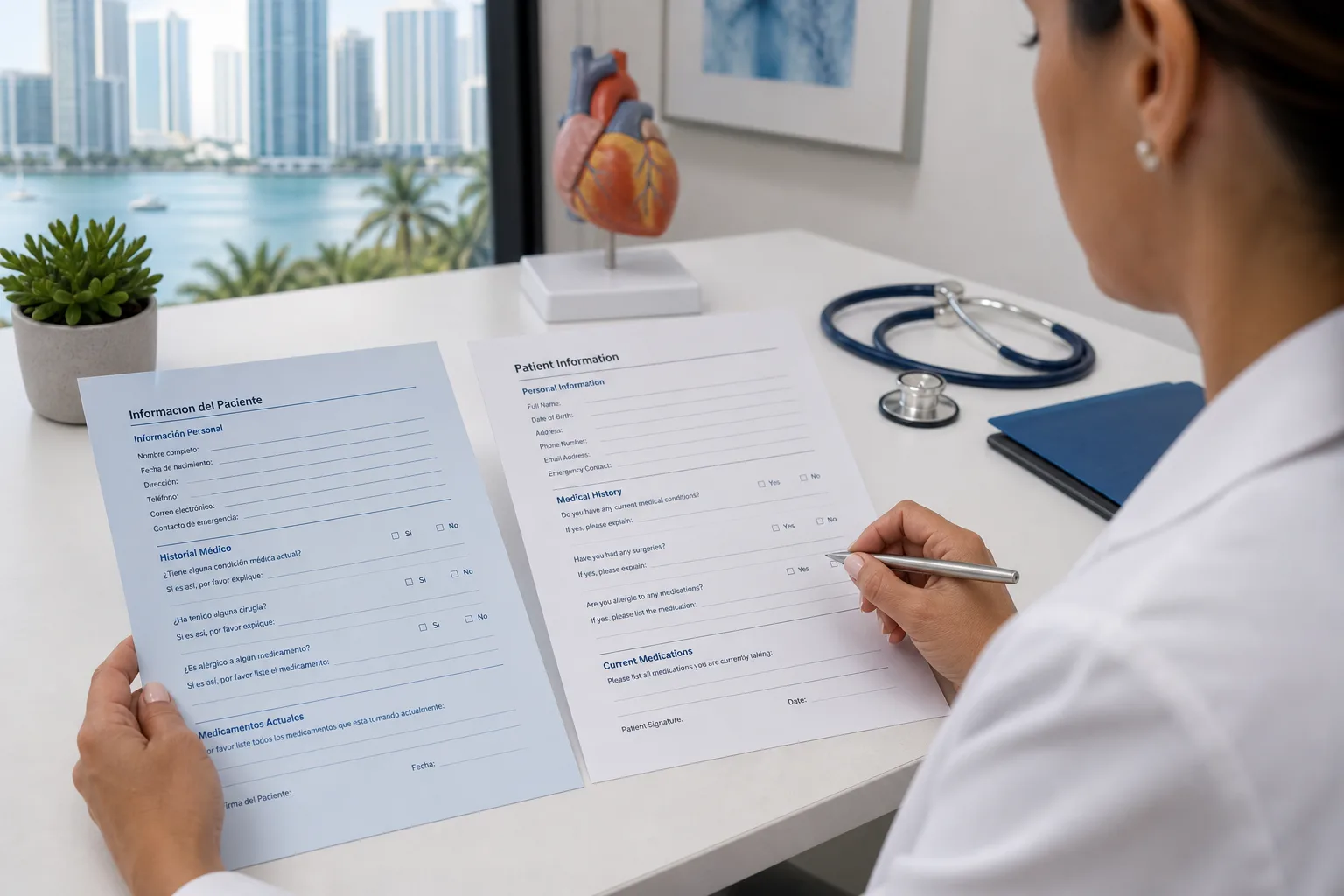
Medical translation involves converting written documents from one language to another. A medical translator works from a source-language document and produces a target-language document — typically at their own pace, with access to references and terminology databases.
Medical translation differs from interpretation in that there is no live conversation. The translator has time to research terminology, consult glossaries, and review the final product for accuracy and consistency. For complex medical texts, this careful review process is essential.
Common documents requiring medical translation include:
- Patient discharge summaries and care instructions
- Clinical trial consent forms
- Medical device manuals and instructions for use (IFU)
- Pharmaceutical inserts and labels
- Patient education materials, brochures, and posters
- Hospital signage and wayfinding
- Electronic health records (EHR) for international patients
- Vaccination records and medical histories for immigration purposes
Key Differences: Medical Interpretation vs. Medical Translation
| Feature | Medical Interpretation | Medical Translation |
|---|---|---|
| Medium | Spoken (or signed) | Written |
| Timing | Real-time | At translator’s pace |
| Deliverable | Live verbal communication | Finished document |
| Format | In-person, phone, or video | Email, PDF, printed document |
| Revisions | Not possible mid-session | Possible before delivery |
| Typical Use | Patient visits, consent discussions | Discharge forms, patient education |
Why Both Services Matter for Miami Healthcare Providers
Miami’s patient population is uniquely multilingual. According to U.S. Census data, roughly 70% of Miami-Dade residents speak a language other than English at home — the highest proportion of any major U.S. metropolitan area. Spanish is dominant, but Haitian Creole, Portuguese, French, Arabic, Chinese, and dozens of other languages are represented.
Healthcare facilities operating in this environment face a dual challenge: real-time communication during clinical encounters and accurate written materials that patients can take home and act on. Neither service alone covers the full patient journey.
Consider a common scenario: a Cuban patient undergoes knee replacement surgery at a Brickell orthopedic clinic. The entire pre-operative consultation requires an interpreter — but after discharge, the patient goes home with a rehabilitation protocol, pain medication instructions, and emergency contact guidance. If those documents are only in English, the patient cannot follow them safely. That’s a medical translation failure, and it poses a liability risk to the provider.
The reverse is also true: translating every document perfectly means nothing if the provider cannot communicate with the patient during the appointment. Both services must work together.
Common Mistakes Miami Healthcare Providers Make
1. Using Bilingual Staff as Interpreters
Many Miami hospitals and clinics have Spanish-speaking staff members who are pressed into service as informal interpreters. While well-intentioned, this practice exposes providers to significant risk:
- Bilingual staff are not trained medical interpreters — they may lack technical vocabulary
- They are not held to professional ethics standards (confidentiality, impartiality)
- If a miscommunication leads to a patient harm event, the provider has no documentation of a qualified interpreter being used
- Title VI compliance requires qualified interpretation — not just any bilingual person
Using a qualified medical interpreter — whether in-person, via phone, or via video — protects both the patient and the organization. Learn more about ITU’s interpretation services for healthcare providers.
2. Using Machine Translation for Patient-Facing Documents
Google Translate and AI-powered translation tools have improved dramatically, but they are not suitable for clinical documents. Medical terminology is highly specialized, medications have official generic and brand names that vary by country, and dosage instructions have zero tolerance for error. A machine-translated discharge form is not just a quality issue — it is a patient safety issue.
3. Assuming Spanish Is Enough
In Miami, Spanish is indeed the dominant non-English language. But healthcare providers who only invest in Spanish language access miss large patient populations speaking Haitian Creole, Portuguese, and other languages. The ITU Translation Services team covers 120+ languages and dialects — because Miami’s patients speak more than Spanish.
4. Not Keeping Certified Translations on File
For patients whose care involves insurance claims, workers’ compensation cases, or immigration medical evaluations, certified translations of medical records may be required. These are not the same as informal translations — they come with a signed statement of accuracy and are accepted by USCIS, courts, and insurance companies.

How to Build a Comprehensive Language Access Program
For Miami healthcare organizations serious about compliance and patient outcomes, a language access program should include all of the following:
Step 1: Conduct a Language Needs Assessment
Survey your patient population to identify the top five to ten languages spoken by LEP patients. For most Miami-area providers, the list will include Spanish, Haitian Creole, Portuguese, and at least several others. Tailor your language access resources to your actual patient demographics.
Step 2: Establish Interpretation Coverage
Partner with a qualified language services provider that offers on-demand interpretation via phone and video. This ensures 24/7 coverage for all languages, not just the ones where you have bilingual staff. For planned appointments and procedures involving high-stakes discussions (surgery, oncology, psychiatry), consider scheduling in-person interpreters in advance.
Step 3: Translate Critical Patient Materials
Identify the top documents that all patients receive — discharge instructions, consent forms, medication guides, patient rights notices — and have them professionally translated into your top languages. Keep the translated versions current as clinical protocols change. ITU’s medical translation team can handle ongoing document management across all major languages.
Step 4: Train Your Clinical Staff
Even with professional interpreters and translated materials, clinical staff need to know how to work effectively with language services. Train providers on how to use VRI equipment, how to speak in clear, short sentences during interpreted encounters, and what to do when an unexpected language need arises.
Step 5: Document Everything
Document interpreter use in every patient record where interpretation was provided. Note the language, the interpreter type (in-person, phone, video), and the provider’s attestation that the patient demonstrated understanding. This documentation is your evidence of Title VI compliance.
ITU Translation Services: Miami’s Language Access Partner
International Translations USA (ITU) is a full-service language services provider headquartered in Miami, FL, serving healthcare organizations across South Florida and all 50 states. Whether you need an on-site interpreter for a surgical consent discussion in Coral Gables or professionally translated patient education materials for a Doral clinic, ITU’s team of credentialed linguists has you covered.
ITU provides:
- Medical interpretation — in-person, over-phone (OPI), and video remote (VRI)
- Medical document translation — discharge summaries, consent forms, patient education materials, EHR documents
- Certified translation — for immigration medical evaluations, workers’ comp claims, and court proceedings
- 120+ languages and dialects — including Spanish, Haitian Creole, Portuguese, French, Arabic, Mandarin, and more
Our linguists are not generalist translators given a medical glossary — they are specialists with proven expertise in healthcare terminology, compliance requirements, and patient communication standards. Learn why healthcare providers across Miami choose ITU.
Frequently Asked Questions
Do I need a certified translator for medical records?
It depends on the purpose. For internal clinical use, a professional (but not necessarily certified) translation may suffice. For immigration purposes (USCIS medical evaluations), workers’ compensation claims, legal proceedings, or submission to government agencies, a certified translation with a signed affidavit of accuracy is required.
Can the same person serve as both interpreter and translator?
Technically, some linguists are qualified to do both, but the skills are distinct. A skilled medical interpreter who excels in real-time spoken communication may not be equally experienced in written translation, and vice versa. A professional language services provider will match the right linguist to the right task.
What languages does ITU cover for healthcare?
ITU covers 120+ languages and dialects. In the Miami-Dade healthcare market, the most commonly requested languages include Spanish, Haitian Creole, Portuguese, French, Arabic, Mandarin, Vietnamese, and Russian. Contact ITU for specific language availability.
How quickly can I get medical documents translated?
Standard turnaround at ITU is 3–5 business days for most clinical documents. Rush services are available for urgent requests — request a free quote to discuss your timeline.
The Bottom Line
Medical interpretation and medical translation are not the same thing — and Miami healthcare providers need both. Interpretation bridges the real-time communication gap during patient encounters; translation ensures written materials are accessible after the encounter. Together, they form the foundation of a compliant, patient-centered language access program.
If your organization is ready to build a stronger multilingual communication strategy, ITU Translation Services is ready to help. Our team has deep roots in the Miami healthcare community and the linguistic range to serve your entire patient population.
Contact International Translations USA today — call (305) 747-5996 or request a free quote online. We serve healthcare providers throughout Miami-Dade, Broward, Palm Beach, and all 50 states.
Related Articles
- Medical Interpretation in Miami: Why a Family Member Isn’t a Substitute for a Pro
- Legal Translation Services Miami
- How to Translate Foreign Academic Credentials in Miami
- Explore the ITU Translation Blog
ITU Translation Services provides professional interpreter services across the healthcare, legal, and business sectors in Miami and throughout South Florida. In addition to medical interpretation, we offer a full range of translation and interpreting services for court hearings, depositions, and corporate settings. Whether you need an on-site interpreter or remote video interpreting, our certified bilingual professionals are available on short notice. Contact us today to schedule a qualified medical interpreter in Miami — accuracy and confidentiality guaranteed.
ITU Translation Services
ATA corporate member and BBB A+ rated translation agency in Miami, FL. Certified translations in 120+ languages, accepted by USCIS, courts and institutions nationwide since 2017.



Need a certified translation?
Free quote in minutes — USCIS acceptance guaranteed.